
Lasagna
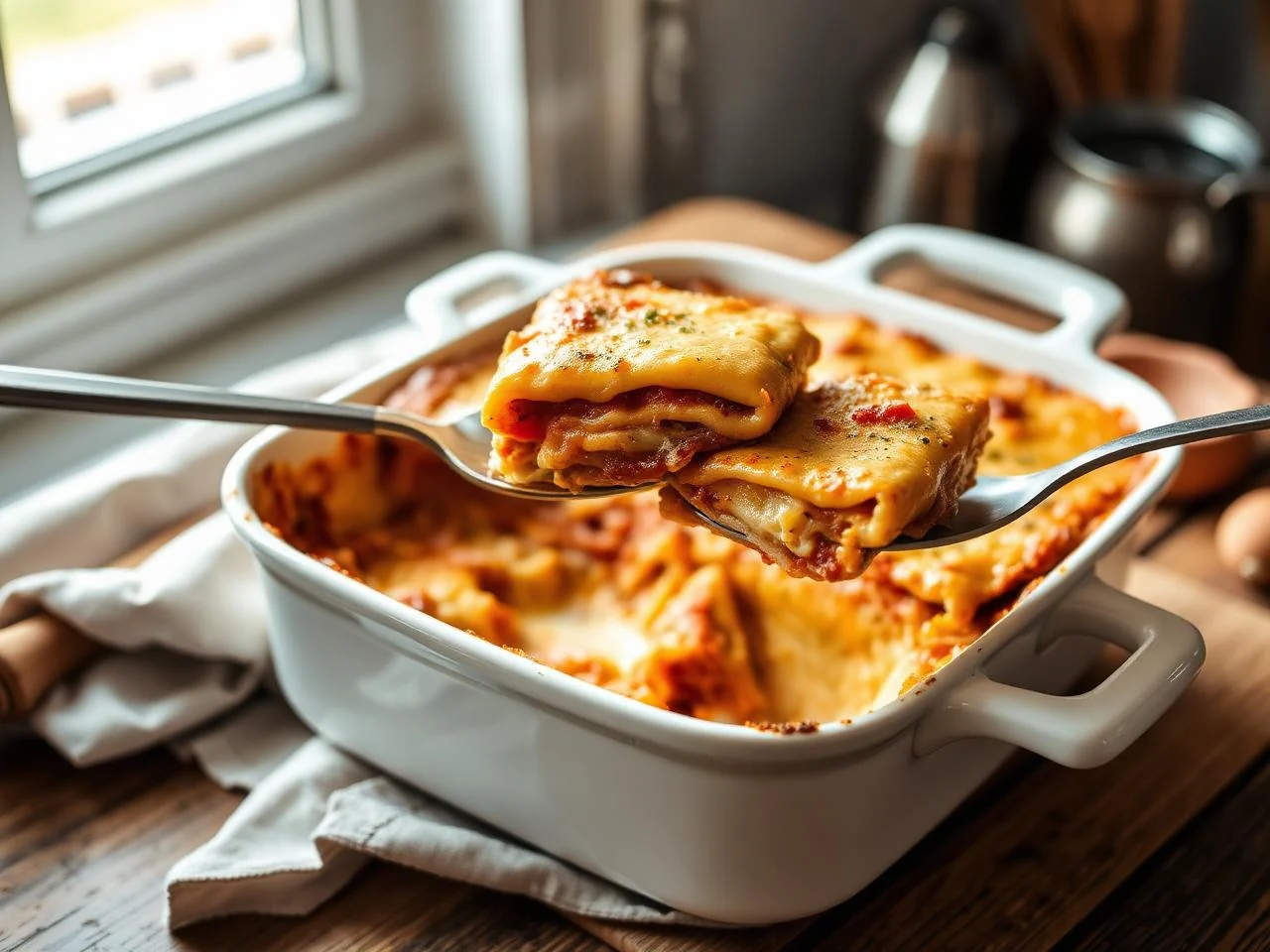
I still remember the first time I made lasagna for my family. It was a cold winter evening, and the aroma of slow-cooked meat sauce and melted cheese filled our home, making everyone's stomach growl with anticipation. Since then, lasagna has become a staple in our household, a dish that never fails to bring us together.
There's something special about a perfectly cooked lasagna - the way the pasta sheets absorb the flavorful sauce, the creaminess of the cheese, and the satisfaction of a warm, comforting meal that's easy to share. In this recipe, I'll guide you through the process of making a classic lasagna from scratch, with tips and tricks to ensure it turns out perfectly every time.
One of the things I love about lasagna is its versatility. You can make it with ground beef, pork, or a combination of the two, and add your favorite vegetables, such as spinach, mushrooms, or bell peppers. The key is to use high-quality ingredients and to cook the sauce slowly, allowing the flavors to meld together.
In the following pages, I'll share my secrets for making the perfect lasagna, from the preparation of the ingredients to the final assembly and baking of the dish. Whether you're a beginner or an experienced cook, I'm confident that you'll find this recipe helpful and enjoyable to make.
So, let's get started! With a little patience and practice, you'll be making delicious lasagna like a pro, and enjoying the satisfaction of a meal that's both nourishing and delicious.
Why You’ll Love This Recipe
- Lasagna is a crowd-pleasing dish that's perfect for family gatherings and special occasions.
- It's a great way to use up leftover ingredients, such as ground meat, vegetables, and cheese.
- The dish can be made ahead of time and refrigerated or frozen for later use.
- Lasagna is a versatile recipe that can be customized to suit your tastes and dietary needs.
- It's a comforting, satisfying meal that's sure to become a favorite in your household.
- The recipe is easy to follow and requires minimal special equipment or cooking techniques.
Why This Recipe Works
The secret to a great lasagna lies in the layering of the ingredients. By alternating between pasta, sauce, and cheese, you create a dish that's both flavorful and textured. The pasta sheets provide a sturdy base, while the sauce adds moisture and flavor. The cheese, of course, is the crowning glory, melting and bubbling in the oven to create a golden, creamy crust.
Another important aspect of lasagna is the cooking time. By baking the dish slowly, you allow the flavors to meld together and the cheese to melt and bubble. This also helps to prevent the pasta from becoming overcooked and mushy.
In addition to the layering and cooking time, the quality of the ingredients is also crucial. Using fresh, high-quality cheese, meat, and vegetables will make a big difference in the final dish. And, of course, don't forget to add a sprinkle of parmesan cheese on top - it's the perfect finishing touch!
Ingredients You’ll Need
When it comes to making lasagna, the ingredients are just as important as the technique. You'll need a variety of ingredients, including ground meat, tomatoes, cheese, and pasta. Here's a list of what you'll need to get started:
Be sure to choose high-quality ingredients, such as fresh vegetables, lean ground meat, and whole-milk cheese. These will make a big difference in the final dish, and will help to ensure that your lasagna turns out rich, flavorful, and satisfying.
- 1 lb (450g) ground beefChoose a lean ground beef, such as 80/20 or 90/10, for the best flavor and texture. You can also use ground pork or a combination of the two if you prefer.
- 1 medium onion, choppedUse a sweet onion, such as Vidalia or Maui, for the best flavor. Be sure to chop the onion finely, so it cooks evenly and quickly.
- 3 cloves garlic, mincedMince the garlic finely, so it distributes evenly throughout the sauce. You can also use garlic powder or garlic salt if you prefer.
- 2 cups (475ml) marinara sauceUse a high-quality marinara sauce, such as homemade or store-bought, for the best flavor. You can also add other ingredients, such as diced tomatoes or tomato paste, to enhance the flavor.
- 1 cup (115g) grated mozzarella cheeseChoose a whole-milk mozzarella cheese, such as fresh or buffalo, for the best flavor and texture. You can also use other types of cheese, such as parmesan or ricotta, if you prefer.
- 1/2 cup (55g) grated parmesan cheeseUse a high-quality parmesan cheese, such as fresh or aged, for the best flavor. You can also use other types of cheese, such as romano or asiago, if you prefer.
- 1 egg, beatenBeat the egg lightly, so it's smooth and even. This will help to bind the cheese and meat mixture together, and create a creamy, custard-like texture.
- 1 cup (120g) ricotta cheeseChoose a whole-milk ricotta cheese, such as fresh or homemade, for the best flavor and texture. You can also use other types of cheese, such as cottage cheese or cream cheese, if you prefer.
- 1 tsp (5g) dried basilUse a high-quality dried basil, such as sweet or Genovese, for the best flavor. You can also use fresh basil, if you prefer, but be sure to chop it finely and use it sparingly.
- 1 tsp (5g) dried oreganoUse a high-quality dried oregano, such as Greek or Italian, for the best flavor. You can also use other herbs, such as thyme or rosemary, if you prefer.
- Salt and pepper to tasteUse a high-quality salt, such as kosher or sea salt, and freshly ground black pepper, for the best flavor. Be sure to taste the sauce and cheese mixture as you go, and adjust the seasoning accordingly.
- 12 lasagna noodlesChoose a high-quality lasagna noodle, such as fresh or dried, for the best texture and flavor. Be sure to cook the noodles al dente, so they're still slightly firm in the center.

Equipment You’ll Need
How to Make Lasagna
- 1Preheat the oven to 375°F (190°C), and cook the lasagna noodles according to the package instructions until they're al dente. Drain the noodles and set them aside to cool.
- 2In a large skillet or sauté pan, cook the ground beef over medium-high heat, breaking it up with a spoon as it cooks, until it's browned and cooked through, about 5-7 minutes.
- 3Add the chopped onion and minced garlic to the skillet, and cook until the onion is translucent and the garlic is fragrant, about 3-5 minutes.
- 4Stir in the marinara sauce, dried basil, and dried oregano, and bring the sauce to a simmer. Reduce the heat to low and let it cook, stirring occasionally, for 10-15 minutes, until the sauce has thickened and the flavors have melded together.
- 5In a large bowl or container, combine the ricotta cheese, beaten egg, salt, and pepper. Mix well to combine, and set the cheese mixture aside.
- 6Spread a layer of the meat sauce in the bottom of the 9x13-inch baking dish, and arrange 4 lasagna noodles on top of the sauce.
- 7Spread half of the ricotta cheese mixture over the noodles, and sprinkle with half of the mozzarella cheese and half of the parmesan cheese.
- 8Repeat the layers, starting with the meat sauce, then the noodles, then the remaining ricotta cheese mixture, and finally the remaining mozzarella and parmesan cheese.
- 9Cover the baking dish with aluminum foil, and bake the lasagna for 30 minutes. Remove the foil, and continue baking for an additional 10-15 minutes, until the cheese is melted and bubbly, and the top is golden brown.
- 10Remove the lasagna from the oven, and let it rest for 10-15 minutes before slicing and serving. Use an instant-read thermometer to check the internal temperature, which should be at least 165°F (74°C).
- 11Slice the lasagna into individual portions, and serve hot, garnished with additional parmesan cheese and fresh basil, if desired.
Expert Tips
- Use a high-quality marinara sauce, such as homemade or store-bought, for the best flavor.
- Don't overcook the lasagna noodles, or they'll become mushy and unappetizing.
- Let the lasagna rest for 10-15 minutes before slicing and serving, to allow the cheese to set and the flavors to meld together.
- Use a variety of cheese, such as mozzarella, parmesan, and ricotta, for the best flavor and texture.
- Add other ingredients, such as diced tomatoes or spinach, to the meat sauce for added flavor and nutrition.
- Use a meat thermometer to ensure the lasagna is cooked to a safe internal temperature, and to prevent overcooking.
- Let the lasagna cool completely before refrigerating or freezing, to prevent the formation of condensation and the growth of bacteria.
- Reheat the lasagna slowly, over low heat, to prevent the cheese from melting and the sauce from becoming too thin.
Common Mistakes to Avoid
- Overcooking the lasagna noodles, which can make them mushy and unappetizing.
- Not letting the lasagna rest before slicing and serving, which can cause the cheese to be runny and the flavors to be unbalanced.
- Using low-quality ingredients, such as processed cheese or canned sauce, which can affect the flavor and texture of the dish.
- Not cooking the lasagna to a safe internal temperature, which can pose a risk to food safety.
- Not using a variety of cheese, which can make the dish bland and uninteresting.
- Not adding other ingredients, such as diced tomatoes or spinach, to the meat sauce, which can make the dish more flavorful and nutritious.
Variations and Substitutions
- Add diced tomatoes or tomato paste to the meat sauce for added flavor and nutrition.
- Use different types of cheese, such as goat cheese or feta, for a unique flavor and texture.
- Add other ingredients, such as diced bell peppers or mushrooms, to the meat sauce for added flavor and nutrition.
- Use whole-wheat lasagna noodles for a healthier and more nutritious option.
- Add a layer of spinach or other leafy greens to the lasagna for added nutrition and flavor.
- Use a variety of meats, such as ground pork or ground turkey, for a different flavor and texture.
- Add a sprinkle of parmesan cheese on top of the lasagna before baking, for a crispy and golden-brown crust.
What to Serve With Lasagna
Lasagna is a versatile dish that can be served in a variety of ways. It's perfect as a main course, served with a side salad or garlic bread, or as a side dish, served with a variety of other Italian-inspired dishes.
Some other ideas for serving lasagna include:
Make-Ahead, Storage, Freezing and Reheating
Lasagna is a great dish to make ahead of time, as it can be refrigerated or frozen for later use. To refrigerate, let the lasagna cool completely, then cover it with plastic wrap or aluminum foil and refrigerate for up to 3 days.
To freeze, let the lasagna cool completely, then wrap it tightly in plastic wrap or aluminum foil and freeze for up to 3 months. To reheat, thaw the lasagna overnight in the refrigerator, then reheat it in the oven or microwave until it's hot and bubbly.
When reheating lasagna, it's best to do so slowly, over low heat, to prevent the cheese from melting and the sauce from becoming too thin. You can also add a sprinkle of parmesan cheese on top of the lasagna before reheating, for a crispy and golden-brown crust.
Frequently Asked Questions
What is the best way to cook lasagna noodles?
The best way to cook lasagna noodles is to cook them al dente, according to the package instructions. This will help them to retain their texture and flavor, and prevent them from becoming mushy or unappetizing.
How do I prevent the lasagna from becoming too dry?
To prevent the lasagna from becoming too dry, be sure to use a variety of cheese, such as mozzarella, parmesan, and ricotta, and to add other ingredients, such as diced tomatoes or spinach, to the meat sauce. You can also cover the lasagna with aluminum foil during baking, to help retain moisture and prevent the cheese from melting too much.
Can I make lasagna ahead of time?
Yes, lasagna is a great dish to make ahead of time, as it can be refrigerated or frozen for later use. To refrigerate, let the lasagna cool completely, then cover it with plastic wrap or aluminum foil and refrigerate for up to 3 days. To freeze, let the lasagna cool completely, then wrap it tightly in plastic wrap or aluminum foil and freeze for up to 3 months.
How do I reheat lasagna?
To reheat lasagna, thaw it overnight in the refrigerator, then reheat it in the oven or microwave until it's hot and bubbly. You can also add a sprinkle of parmesan cheese on top of the lasagna before reheating, for a crispy and golden-brown crust.
What is the best way to serve lasagna?
Lasagna is a versatile dish that can be served in a variety of ways. It's perfect as a main course, served with a side salad or garlic bread, or as a side dish, served with a variety of other Italian-inspired dishes.
Can I use different types of cheese in lasagna?
Yes, you can use different types of cheese in lasagna, such as goat cheese or feta, for a unique flavor and texture. Just be sure to use a variety of cheese, such as mozzarella, parmesan, and ricotta, for the best flavor and texture.
How do I prevent the lasagna from becoming too greasy?
To prevent the lasagna from becoming too greasy, be sure to use a lean ground meat, such as ground beef or ground turkey, and to cook the meat sauce slowly, over low heat, to help the fat to render out. You can also use a paper towel to blot the lasagna, before serving, to remove any excess grease.
Can I make lasagna in a slow cooker?
Yes, you can make lasagna in a slow cooker, by cooking the meat sauce and lasagna noodles separately, then assembling the lasagna in the slow cooker and cooking it on low for 3-4 hours. Just be sure to use a slow cooker liner, to prevent the lasagna from sticking to the cooker, and to cook the lasagna until it's hot and bubbly.
Ingredients
- 1 lb (450g) ground beef
- 1 medium onion, chopped
- 3 cloves garlic, minced
- 2 cups (475ml) marinara sauce
- 1 cup (115g) grated mozzarella cheese
- 1/2 cup (55g) grated parmesan cheese
- 1 egg, beaten
- 1 cup (120g) ricotta cheese
- 1 tsp (5g) dried basil
- 1 tsp (5g) dried oregano
- Salt and pepper to taste
- 12 lasagna noodles
Instructions
- Preheat the oven to 375°F (190°C), and cook the lasagna noodles according to the package instructions until they're al dente. Drain the noodles and set them aside to cool.
- In a large skillet or sauté pan, cook the ground beef over medium-high heat, breaking it up with a spoon as it cooks, until it's browned and cooked through, about 5-7 minutes.
- Add the chopped onion and minced garlic to the skillet, and cook until the onion is translucent and the garlic is fragrant, about 3-5 minutes.
- Stir in the marinara sauce, dried basil, and dried oregano, and bring the sauce to a simmer. Reduce the heat to low and let it cook, stirring occasionally, for 10-15 minutes, until the sauce has thickened and the flavors have melded together.
- In a large bowl or container, combine the ricotta cheese, beaten egg, salt, and pepper. Mix well to combine, and set the cheese mixture aside.
- Spread a layer of the meat sauce in the bottom of the 9x13-inch baking dish, and arrange 4 lasagna noodles on top of the sauce.
- Spread half of the ricotta cheese mixture over the noodles, and sprinkle with half of the mozzarella cheese and half of the parmesan cheese.
- Repeat the layers, starting with the meat sauce, then the noodles, then the remaining ricotta cheese mixture, and finally the remaining mozzarella and parmesan cheese.
- Cover the baking dish with aluminum foil, and bake the lasagna for 30 minutes. Remove the foil, and continue baking for an additional 10-15 minutes, until the cheese is melted and bubbly, and the top is golden brown.
- Remove the lasagna from the oven, and let it rest for 10-15 minutes before slicing and serving. Use an instant-read thermometer to check the internal temperature, which should be at least 165°F (74°C).
- Slice the lasagna into individual portions, and serve hot, garnished with additional parmesan cheese and fresh basil, if desired.