Love this? Pin it for later! 📌
There’s something magical about the sizzle of chicken hitting hot oil on a lazy Sunday morning. The aroma drifts through the house like a warm invitation to gather around the table, mugs of coffee in hand, sunlight streaming through the windows. These Southern Fried Chicken Tenders have become my signature brunch dish—the one my friends request weeks in advance, the one my nephew swears rivals his favorite Nashville hot spot, the one that turns a simple weekend morning into a celebration.
I developed this recipe after years of disappointing brunch outings where the chicken was either too greasy, too bland, or—heaven forbid—pre-frozen and reheated. The breakthrough came during a humid August weekend in Savannah, where I learned the secrets of true Southern frying from a charming home cook named Miss Roberta. Her technique, passed down through generations, involved a buttermilk bath seasoned with hot sauce, a double-dredge in seasoned flour, and the patience to let the oil temperature dance between 325-350°F. The result? Shatteringly crisp, deeply flavorful tenders that stay juicy for hours—perfect for a leisurely brunch spread.
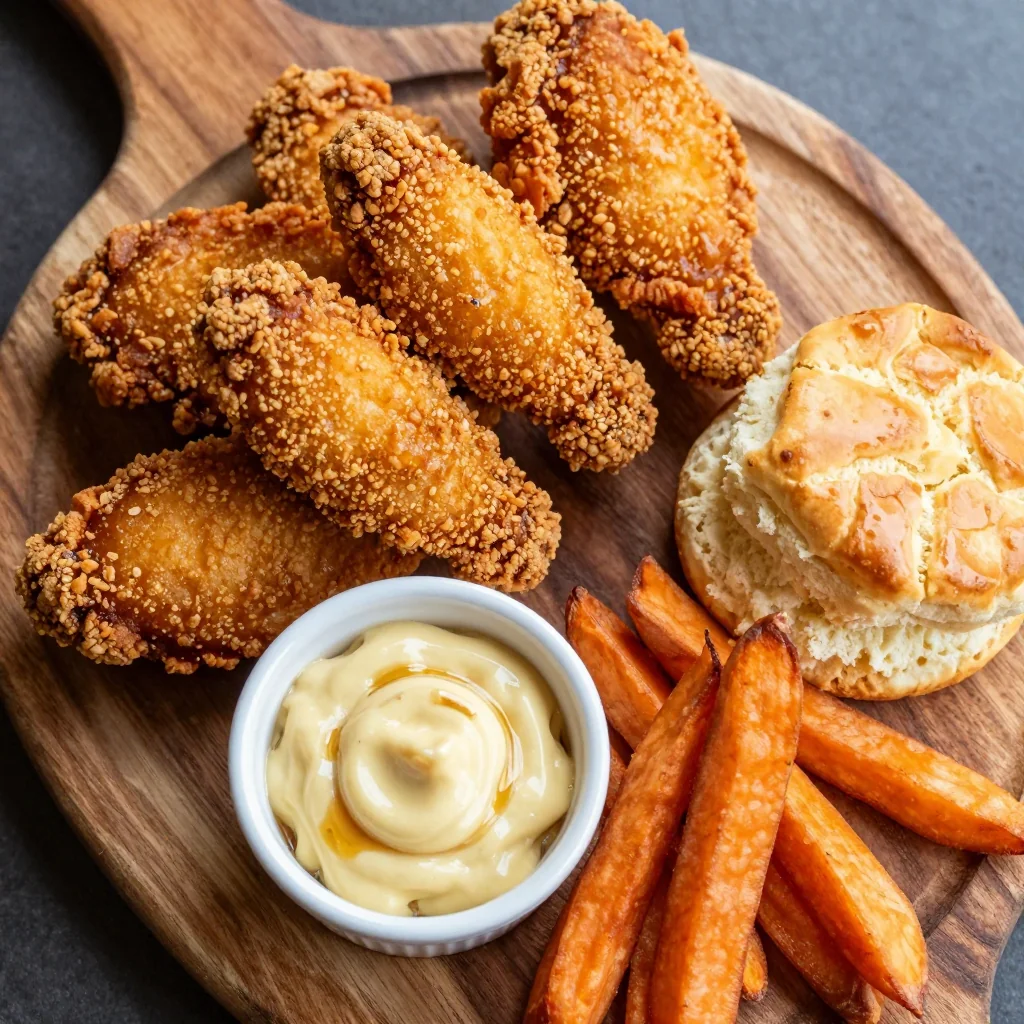
What makes these tenders ideal for brunch isn't just their incredible flavor, but their versatility. Serve them alongside fluffy buttermilk biscuits and honey butter for a sweet-savory combination, or pile them high on Belgian waffles drizzled with maple syrup for the ultimate chicken and waffles experience. They're equally at home beside a fresh fruit salad and mimosas as they are tucked into a breakfast sandwich with pepper jelly and arugula. The preparation is surprisingly straightforward, requiring just 30 minutes of active time, making them achievable even for novice cooks hosting their first brunch gathering.
Why This Recipe Works
- Double Buttermilk Bath: A 24-hour soak in seasoned buttermilk tenderizes the meat while infusing it with layers of flavor from hot sauce, garlic, and herbs
- Seasoned Flour Blend: Our custom flour mixture includes smoked paprika, cayenne, and a touch of cornstarch for extra crunch
- Perfect Oil Temperature: Maintaining 325-350°F ensures even cooking without burning, creating that signature golden-brown crust
- Resting Technique: Letting the breaded tenders rest before frying prevents the coating from falling off
- Brunch-Friendly Timing: The chicken stays crispy for up to 2 hours in a warm oven, perfect for relaxed brunch service
- Versatile Serving Options: From biscuit sandwiches to waffle toppers, these tenders adapt to any brunch theme
- Make-Ahead Friendly: Bread the tenders the night before for stress-free morning preparation
Ingredients You'll Need
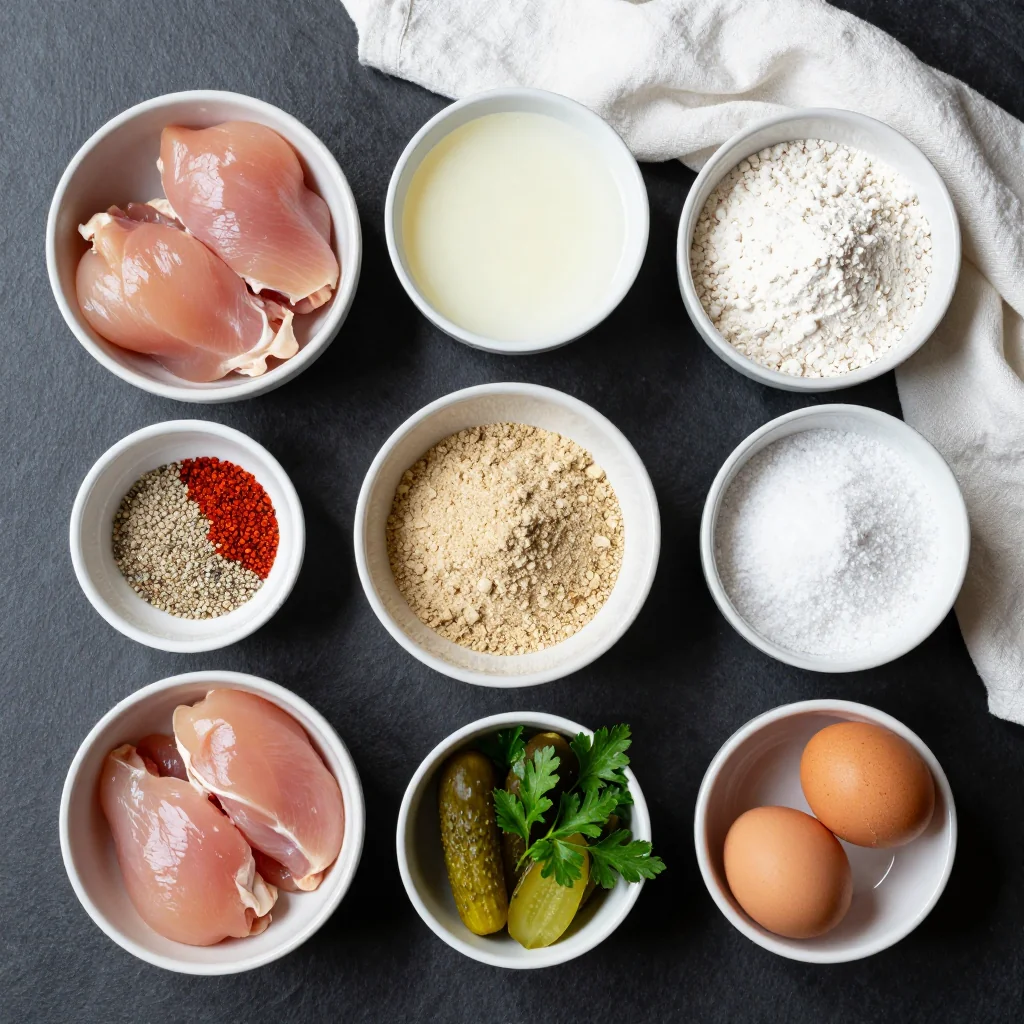
The secret to exceptional fried chicken lies in the quality of your ingredients. Start with 2 pounds of chicken tenders—not to be confused with chicken strips or breast meat cut into pieces. True tenders, the pectoralis minor muscle located underneath the breast, offer superior tenderness and a more compact shape that cooks evenly. If your grocery store doesn't carry them separately, purchase whole chicken breasts and remove the tenders yourself, or substitute with boneless thighs cut into strips.
For the buttermilk marinade, you'll need 2 cups of full-fat buttermilk. The acidity tenderizes while the natural enzymes work their magic over 24 hours. Low-fat versions simply won't deliver the same results. The 3 tablespoons of Louisiana-style hot sauce adds subtle heat and vinegar brightness—Crystal or Frank's RedHot are traditional choices, but any vinegar-based hot sauce works. Avoid thicker, Mexican-style hot sauces which can make the coating gummy.
Our seasoned flour blend combines 2½ cups all-purpose flour with ½ cup cornstarch for extra crunch. The cornstarch creates a lighter, more delicate crust that shatters beautifully. For seasoning, 2 tablespoons each of garlic powder and onion powder provide savory depth, while 1 tablespoon each of smoked paprika and cayenne pepper deliver that signature Southern heat and color. Fresh-ground black pepper and Kosher salt are essential—table salt is too fine and can make the coating taste metallic.
The frying medium matters enormously. Use 2 quarts of peanut oil for its high smoke point and neutral flavor. Canola or vegetable oil work in a pinch, but peanut oil's subtle nuttiness enhances the chicken's flavor. You'll also need a candy or deep-fry thermometer—guessing oil temperature is the fastest route to greasy or burnt chicken.
How to Make Southern Fried Chicken Tenders for Brunch
Prepare the Buttermilk Marinade
In a large bowl, whisk together 2 cups buttermilk, 3 tablespoons hot sauce, 2 teaspoons kosher salt, 1 teaspoon black pepper, 2 minced garlic cloves, and 1 tablespoon chopped fresh thyme. The mixture should be pale orange with visible specks of herbs. Taste and adjust heat—remember the flavors will mellow during marinating. Reserve ½ cup of this mixture in a separate container for later use.
Marinate the Chicken
Pat 2 pounds chicken tenders completely dry with paper towels—moisture is the enemy of good breading. Submerge tenders in the buttermilk mixture, ensuring each piece is coated. Cover tightly with plastic wrap, pressing it directly onto the surface to prevent air exposure. Refrigerate for 24 hours, turning once if possible. This extended marinating time transforms tough meat into silky, flavorful chicken.
Create the Seasoned Flour
In a large shallow dish, combine 2½ cups flour, ½ cup cornstarch, 2 tablespoons garlic powder, 2 tablespoons onion powder, 1 tablespoon smoked paprika, 1 tablespoon cayenne, 2 teaspoons kosher salt, and 1 teaspoon black pepper. Whisk thoroughly—every flour particle should be tinted orange from the paprika. Create a well in the center large enough to accommodate several tenders at once.
Set Up Your Breading Station
Remove chicken from marinade, letting excess drip off but don't wipe clean—that sticky surface helps the flour adhere. Arrange three stations: marinated chicken, seasoned flour, and a wire rack set over a baking sheet. Pour the reserved ½ cup buttermilk mixture into a shallow bowl. This will be your "glue" for the second coating, creating those signature craggy bits that fry into ultra-crispy nooks.
Double-Dredge the Tenders
Working in batches of 3-4, drop tenders into flour mixture, pressing firmly to adhere. Lift, gently shake off excess, then dip quickly into reserved buttermilk. Return to flour, pressing again—this second coating creates the craggy texture. Place on wire rack and repeat. Let breaded tenders rest 15 minutes—this crucial step allows the coating to hydrate and set, preventing it from sliding off during frying.
Heat the Oil
Pour 2 quarts peanut oil into a heavy Dutch oven or deep cast-iron skillet. Attach thermometer to side, ensuring tip doesn't touch bottom. Heat over medium-high to 375°F—oil temperature will drop when chicken is added. Meanwhile, preheat oven to 200°F and set a clean wire rack over a rimmed baking sheet. This low oven keeps first batches warm and crispy while you finish frying.
Fry in Batches
Carefully lower 4-5 tenders into oil—don't crowd them or oil temperature will plummet. Oil should bubble vigorously around chicken; adjust heat to maintain 325-350°F. Fry 3-4 minutes per side until deep golden brown and internal temperature reaches 165°F. Use tongs to turn gently, avoiding piercing the coating. Transfer to prepared rack in warm oven while frying remaining batches.
Season and Serve
While last batch fries, whisk together finishing salt blend: 1 tablespoon kosher salt, 1 teaspoon smoked paprika, and ½ teaspoon cayenne. Remove chicken from oven, immediately sprinkle with seasoning mixture—it will stick to the hot surface. Let rest 5 minutes before serving to allow juices to redistribute. Arrange on a platter with lemon wedges, honey butter, and your favorite brunch accompaniments.
Expert Tips
Oil Temperature Control
Invest in a good thermometer and don't rush heating. Oil that's too cool equals greasy chicken; too hot burns the coating before the meat cooks. Between batches, let oil return to 375°F.
Moisture Management
Pat chicken very dry before marinating, and let breaded pieces rest on a rack—not paper towels which create steam and soften the coating. Excess moisture is your enemy.
Don't Overcrowd
Fry in small batches. Overcrowding drops oil temperature dramatically, leading to soggy coating and uneven cooking. Better to take your time than rush and ruin the batch.
Make-Ahead Magic
Bread the chicken the night before and refrigerate uncovered on a rack. The coating will set beautifully, and morning prep becomes as simple as heating oil and frying.
Flavor Variations
Add 1 tablespoon ranch seasoning to flour for herby flavor, or swap smoked paprika for regular plus 1 teaspoon liquid smoke. For extra heat, add ½ teaspoon white pepper.
Testing Doneness
Use an instant-read thermometer inserted horizontally into the thickest tender. At 165°F, they're perfectly cooked—juicy and safe. They'll continue cooking slightly while resting.
Variations to Try
Nashville Hot Style
After frying, brush tenders with a mixture of ¼ cup lard, 2 tablespoons cayenne, 1 tablespoon brown sugar, and 1 teaspoon garlic powder. Serve with pickles and white bread.
Honey Butter Glazed
Whisk together ½ cup honey, 4 tablespoons softened butter, and pinch of salt. Brush over hot chicken for a sweet-savory glaze that hardens into a shiny shell.
Everything Bagel Crust
Replace ½ cup flour with everything bagel seasoning. After frying, sprinkle with additional seasoning and serve with cream cheese dip for brunch twist.
Lemon Pepper
Add zest of 2 lemons and 1 tablespoon cracked black pepper to flour mixture. Finish with a squeeze of fresh lemon and lemon-pepper seasoning blend.
Storage Tips
While these tenders are best fresh, proper storage can maintain their quality for later enjoyment. Refrigerate leftovers in an airtight container with paper towels between layers to absorb moisture. They'll keep 3-4 days but are best within 48 hours. Reheat in a 400°F oven on a wire rack set over a baking sheet for 8-10 minutes—never microwave, which creates rubbery coating.
For long-term storage, freeze cooled tenders in a single layer on a baking sheet, then transfer to freezer bags with parchment between pieces. They'll maintain quality for 2 months. Reheat from frozen at 425°F for 15-18 minutes, flipping halfway through.
The breaded, uncooked tenders can be frozen for up to 1 month. Freeze on a parchment-lined sheet until solid, then transfer to bags. Fry directly from frozen, adding 2-3 minutes to cooking time. This make-ahead trick is perfect for impromptu brunch gatherings.
Frequently Asked Questions
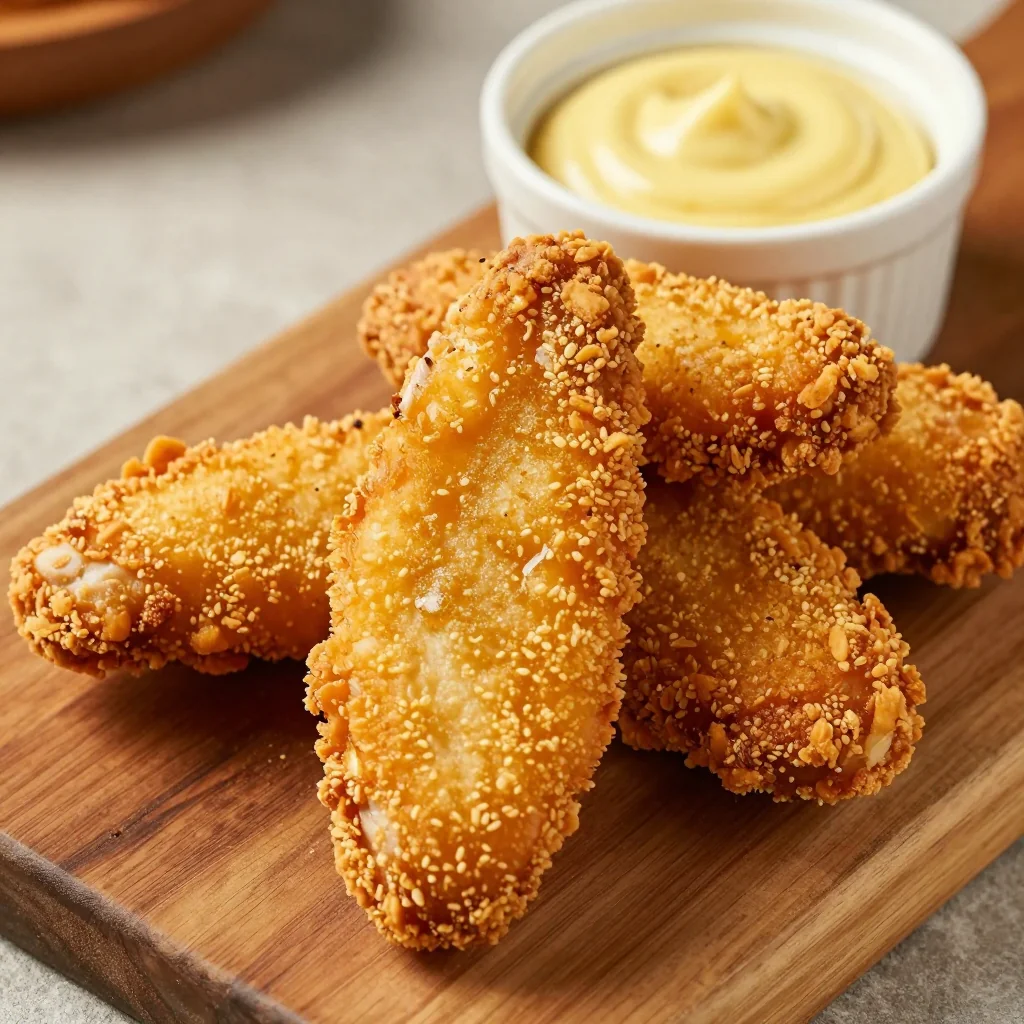
Southern Fried Chicken Tenders for Brunch
Ingredients
Instructions
- Marinate: Whisk buttermilk, hot sauce, garlic, thyme, 2 tsp salt, and 1 tsp pepper. Add chicken, cover, refrigerate 24 hours.
- Season flour: Combine flour, cornstarch, garlic powder, onion powder, paprika, cayenne, 2 tsp salt, and 1 tsp pepper in shallow dish.
- Bread: Remove chicken from marinade, letting excess drip off. Dredge in flour, press to adhere, dip in reserved buttermilk, dredge again. Rest 15 minutes.
- Heat oil: Heat 2 quarts peanut oil in Dutch oven to 375°F. Preheat oven to 200°F with wire rack set over rimmed sheet.
- Fry: Working in batches, fry chicken 3-4 minutes per side until golden and 165°F internal. Maintain 325-350°F oil temperature.
- Season & serve: Transfer to rack in warm oven. Mix finishing salt blend and sprinkle over hot chicken. Rest 5 minutes before serving.
Recipe Notes
Chicken can be breaded the night before and refrigerated uncovered. For extra crispy coating, add ½ cup cornstarch to flour mixture. Leftovers keep 3-4 days refrigerated or 2 months frozen.