Love this? Pin it for later! 📌
Slow-Roasted Herb-Stuffed Chicken with Root Vegetables for Festive Suppers
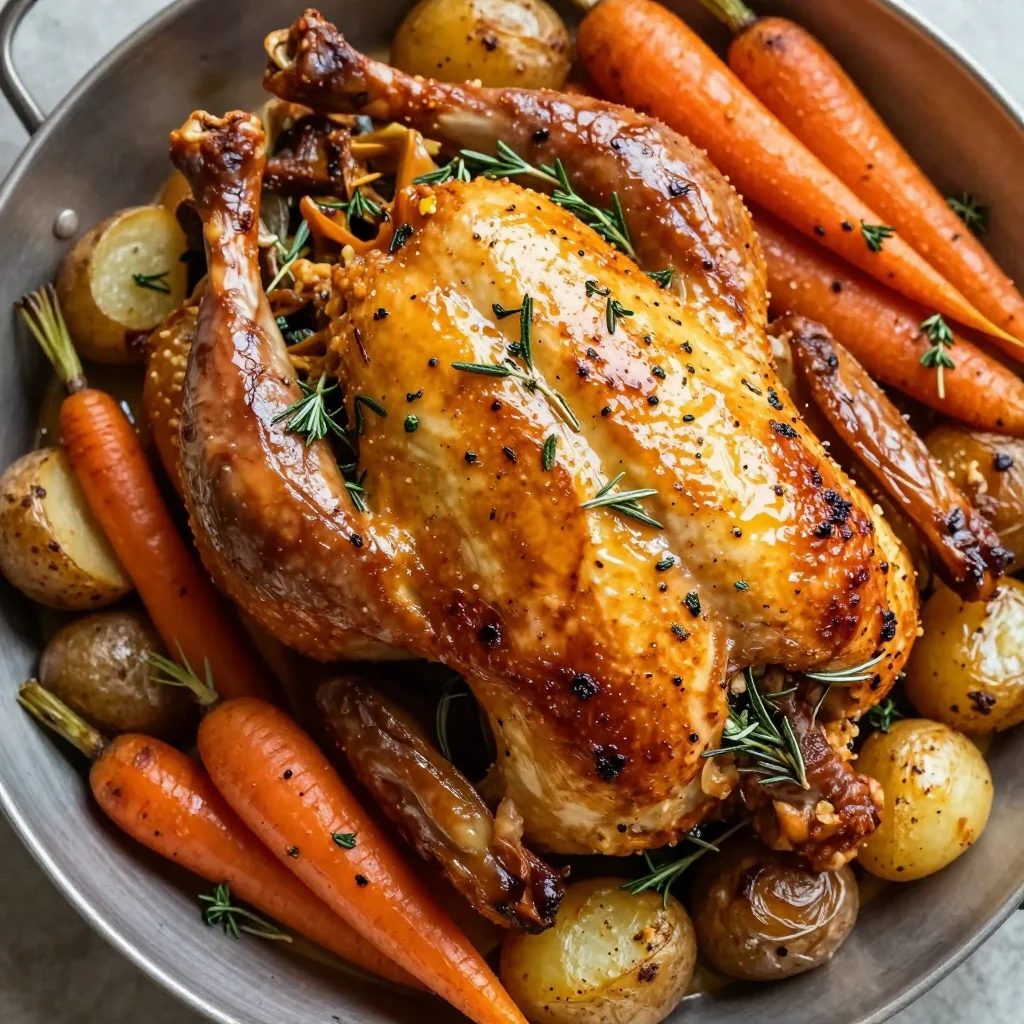
There’s something quietly majestic about a whole chicken emerging from the oven after a long, slow roast—skin burnished bronze, herbs perfuming the air, and root vegetables caramelized into sweet, earthy nuggets. For me, this dish is the culinary equivalent of a crackling fireplace on a frosty evening: comforting, generous, and exactly what you want to gather around when the nights turn long.
I first served this slow-roasted herb-stuffed chicken on the Winter Solstice six years ago. My parents had driven through a snow-dusted dusk to reach our little blue house, and the only thing I had in the fridge was a plump bird from the farmers’ market and a motley collection of root vegetables. I stuffed the cavity with whatever herbs hadn’t frozen on the porch—rosemary, thyme, a sad-looking sage leaf or two—and shoved the pan into the oven low and slow while we played board games and let the snow pile up outside. Three hours later, the meat was so tender it slipped off the bone, the vegetables had drunk up the savory schmaltz, and the kitchen smelled like a place you never want to leave. We’ve repeated that December ritual every year since, adding friends, babies, and extra chairs around the table but never changing the recipe.
What makes this chicken perfect for festive suppers is its effortless elegance. You season and stuff it in the morning, leave it unattended for most of the afternoon, and pull out a centerpiece that looks like you spent the whole day fussing. The low oven temperature renders every ounce of fat, basting the meat from the inside out, while the vegetables roast in the buttery juices below. No basting, no brining, no panic—just pure, soul-warming flavor.
Why This Recipe Works
- Ultra-low heat: A 275 °F (135 °C) oven dissolves collagen slowly, yielding fork-tender meat that stays juicy even if you overshoot the timer by 20 minutes.
- Herb butter under the skin: A fragrant paste of butter, garlic, and fresh herbs insulates the breast and self-bastes as it melts.
- Layered vegetables: Dense roots go in first, soaking up dripping fat; quicker vegetables join later so everything finishes at the same time.
- One-pan wonder: Protein and sides cook together, leaving you free to stir cranberry sauce or pour another glass of wine.
- Make-ahead magic: Stuff and truss the bird up to 24 hours early; pop into the oven when guests arrive.
- Leftover gold: Carcasses simmer into the richest stock you’ll taste all year.
Ingredients You'll Need
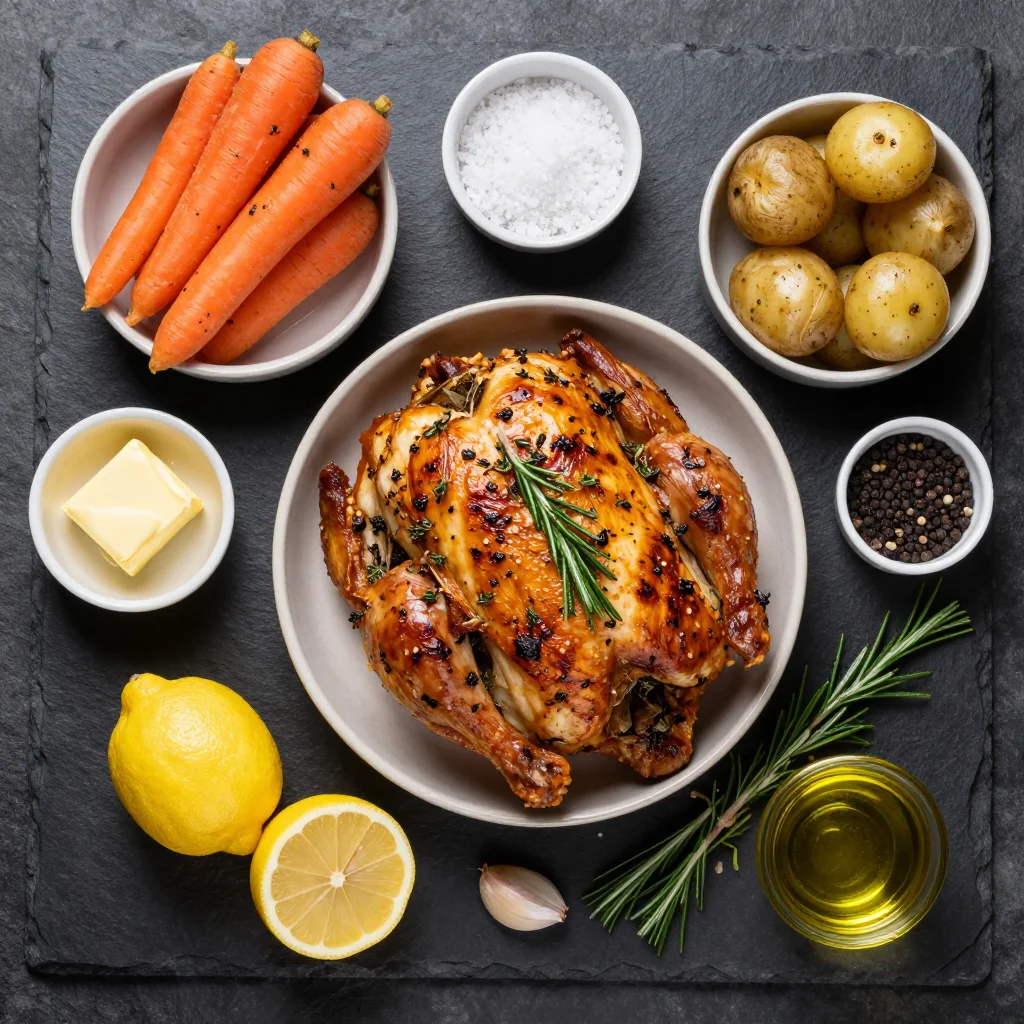
Great ingredients matter when the technique is this simple. Seek out a pasture-raised chicken if you can; the flavor difference is night and day. Aim for 4½–5 lbs—large enough to feed six adults once the vegetables are factored in, but not so big that it outgrows your roasting pan.
Herb Butter: Unsalted butter softens to a spreadable cream that carries minced garlic, lemon zest, and a trio of sturdy herbs. Rosemary brings piney perfume, thyme adds delicate grassiness, and sage gives that unmistakable autumnal warmth. If your garden overflows with tarragon or oregano, swap in a tablespoon or two.
Stuffing Aromatics: Instead of bread, we stuff the cavity with quartered onion, more herb sprigs, and a halved lemon. These aromatics steam from the inside, keeping the breast moist and perfuming the drippings that will later glaze the vegetables.
Root Vegetables: I use a colorful mix of golden beets (they don’t bleed like red ones), rainbow carrots, fingerling potatoes, and celery root for a subtle celery note. Parsnips are magnificent here—their natural sweetness intensifies in the slow heat—but peel the woody core if they’re large. If Jerusalem artichokes appear at your farmers’ market, add a handful; they turn candy-creamy and make excellent conversation starters.
Pantry Staples: Extra-virgin olive oil, kosher salt, freshly cracked black pepper, and a whisper of smoked paprika for color. I finish with a drizzle of maple syrup mixed into the pan juices during the last 15 minutes; the sugars caramelize into a shiny lacquer without burning.
How to Make Slow-Roasted Herb-Stuffed Chicken with Root Vegetables
Dry-brine & season the night before
Pat the chicken very dry with paper towels—moisture is the enemy of crispy skin. Loosen the skin over the breast and thighs with your fingers, creating pockets without tearing. Mix 1 tablespoon kosher salt, 1 teaspoon freshly ground black pepper, and ½ teaspoon baking powder; sprinkle all over and inside the cavity. Place on a rack set in a rimmed baking sheet, uncovered, in the refrigerator overnight. The skin will dehydrate and the salt will penetrate, seasoning the meat to the bone.
Make the herb butter
In a small bowl, combine 6 tablespoons softened unsalted butter, 2 minced garlic cloves, 1 tablespoon finely chopped rosemary, 1 tablespoon thyme leaves, 2 teaspoons minced sage, 1 teaspoon lemon zest, and ½ teaspoon smoked paprika. Mash with a fork until uniform. Can be made 3 days ahead; store covered in the fridge but bring to room temperature before using so it spreads easily.
Stuff & truss
Remove the chicken from the fridge 45 minutes before roasting. Slide half of the herb butter under the skin, pushing it as far toward the back and legs as you can without ripping. Stuff the cavity with ½ quartered onion, ½ quartered lemon, 4 smashed garlic cloves, and a few herb sprigs. Tie the legs together with kitchen twine and tuck the wing tips behind the back so they don’t burn.
Prep the vegetables
Peel and cut 4 medium golden beets, 4 medium carrots, 1 small celery root, and 1 pound fingerling potatoes into 1½-inch chunks. Toss with 2 tablespoons olive oil, 1 teaspoon salt, and plenty of pepper. Spread in a single layer in a large roasting pan—one that will fit the chicken comfortably on a rack above them.
Position & preheat
Set a flat roasting rack over the vegetables. Place the chicken breast-side up on the rack; the juices will drip down and bathe the roots underneath. Slide the pan into the lower third of a cold oven, then set the temperature to 275 °F (135 °C). Starting in a cold oven helps the very center of the breast rise gently, preventing dryness.
Slow-roast undisturbed
Roast for 2 hours without opening the door. The steady, humid heat melts connective tissue and begins to render the fat. After 2 hours, gently stir the vegetables so they brown evenly. Continue roasting another 45–60 minutes, until the thickest part of the thigh registers 170 °F (77 °C) on an instant-read thermometer.
Crisp the skin
Increase the oven to 450 °F (230 °C). Brush the remaining herb butter over the skin. Roast 10–12 minutes more, watching closely, until the skin is deep mahogany and blistered. If your broiler is fierce, you can slide the bird under it for the final 2 minutes—just don’t walk away.
Glaze & rest
Whisk 2 tablespoons pure maple syrup into the pan juices. Return to the oven for 5 minutes so the sugars caramelize. Transfer the chicken to a carving board and tent loosely with foil; rest 20 minutes so the juices redistribute. Meanwhile, give the vegetables a final toss in the sticky, fragrant glaze.
Carve & serve
Snip the twine. Remove the stuffing aromatics and discard (or nibble the onion, as my father does). Carve the breast in thick slices, then separate the thighs and drumsticks. Serve on a warm platter nestled among the glossy vegetables. Spoon some of the maple-herb juices over the top and pass the rest in a gravy boat.
Expert Tips
Use two thermometers
An oven-safe probe stays in the thigh; an instant-read double-checks the deepest part of the breast. Aim for 165 °F (74 °C) in the breast and 170 °F (77 °C) in the thigh for optimal juiciness.
Save the schmaltz
Strain and refrigerate the golden fat left in the pan. It’s liquid gold for roasting potatoes or sautéing greens all week long.
Don’t skip the rest
Tent loosely, don’t wrap tightly. Trapped steam will soften the crackling skin you worked so hard to achieve.
Vertical roast option
Perch the chicken upright on a beer-can roaster for even browning all around; rotate the pan once halfway through.
Crisp skin insurance
If the skin still needs more snap after the high-heat blast, switch to the broiler for 60–90 seconds. Keep the door ajar so you can watch every second.
Double-batch vegetables
If you’re feeding a crowd, roast a second tray of vegetables beneath the bird, swapping positions when you stir.
Variations to Try
- Mediterranean twist: Swap rosemary for oregano, add sun-dried tomato paste to the butter, and throw in wedges of fennel bulb with the vegetables.
- Smoky heat: Add ½ teaspoon chipotle powder and 1 teaspoon brown sugar to the herb butter; include chunks of butternut squash and black beans for the final 45 minutes.
- Citrus & coriander: Replace lemon with orange and lime; crush 1 teaspoon coriander seeds into the butter. Add baby turnips and whole shallots to the pan.
- Alliums extravaganza: Skip root vegetables and roast whole cipollini onions, pearl onions, and halved garlic bulbs underneath; finish with a splash of balsamic.
- Gluten-free gravy: Whisk 2 tablespoons cornstarch with the pan drippings and a cup of warm stock; simmer 3 minutes for glossy gravy.
Storage Tips
Refrigerate: Carve leftover meat off the bone and store in an airtight container with some of the pan juices to keep it moist. Refrigerate up to 4 days. Wrapped vegetables keep equally well; reheat in a skillet with a splash of stock.
Freeze: Freeze carved meat in vacuum-sealed or zip-top bags with as much air removed as possible for up to 3 months. Thaw overnight in the fridge and reheat gently in a 300 °F (150 °C) oven with a splash of chicken stock.
Stock: Don’t discard the bones! Simmer them with onion peels, carrot tops, and a bay leaf for 4–6 hours. Strain, reduce by one-third, and freeze in pint jars. Your future soups will thank you.
Frequently Asked Questions
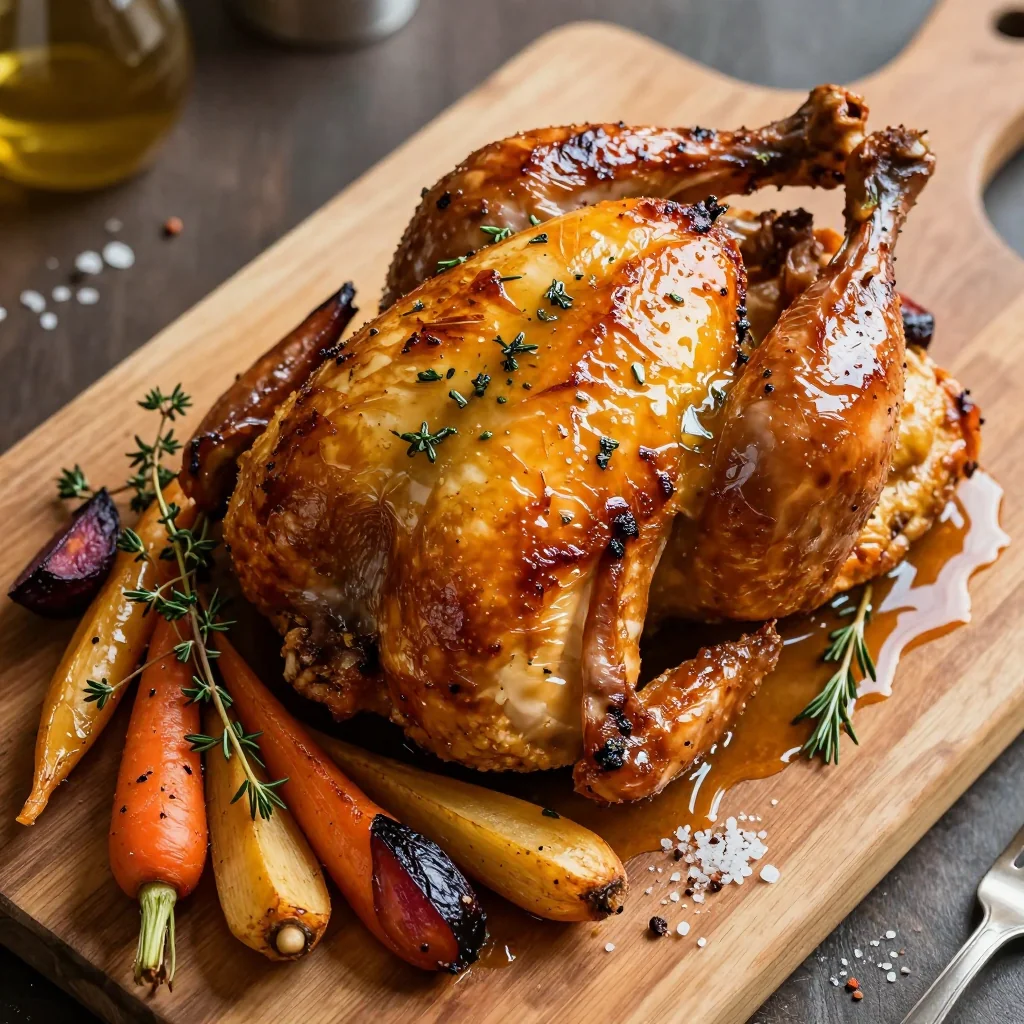
Slow-Roasted Herb-Stuffed Chicken with Root Vegetables
Ingredients
Instructions
- Dry-brine: Pat chicken dry. Mix 1 tbsp salt, pepper, and baking powder; sprinkle all over. Chill uncovered overnight.
- Herb butter: Combine butter, garlic, herbs, zest, and paprika. Set aside.
- Stuff: Spread half the butter under skin; stuff cavity with onion, lemon, and herb sprigs. Tie legs.
- Vegetables: Toss beets, carrots, celery root, and potatoes with oil, remaining salt, and pepper. Spread in roasting pan; set rack on top.
- Roast: Place chicken on rack. Set pan in cold oven; heat to 275 °F. Roast 2 hours, stir veg, continue 45–60 min to 170 °F thigh temp.
- Crisp: Increase oven to 450 °F. Brush remaining butter over skin; roast 10–12 min until deep brown.
- Glaze: Stir maple syrup into pan juices; roast 5 min more. Rest chicken 20 min, carve, and serve with vegetables.
Recipe Notes
Starting the chicken in a cold oven helps the breast and thighs finish at the same time. Don’t skip the resting step—juices will stay in the meat instead of flooding your board.