Love this? Pin it for later! 📌
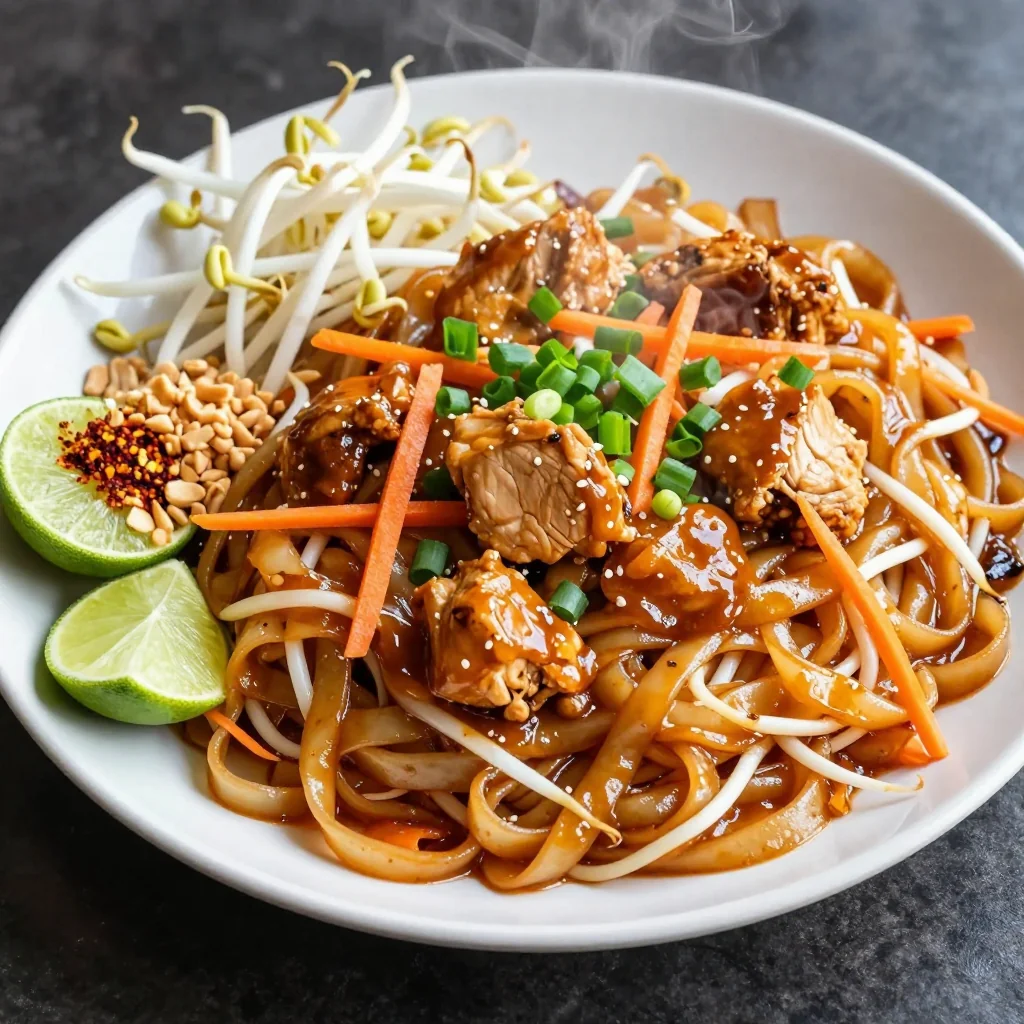
There’s a moment—usually around 6:17 p.m.—when the hunger hits and the siren song of the delivery app starts crooning. I’ve been there: shoes kicked off, fridge half-empty, willpower evaporating faster than the Wi-Fi signal. That was exactly the scene last Tuesday when my teenager declared, “I could murder some pad thai.” Instead of surrendering to a $42 order (plus tip, plus the 45-minute wait), I grabbed a bowl of rice noodles, last night’s chicken, and the jar of tamarind paste that’s been hiding behind the oat milk. Fifteen minutes later we were slurping glossy, tangy, peanut-strewn noodles that tasted exactly like the white take-out boxes we used to worship. Since then, three neighbors have texted for the recipe, so I’m putting it here—step by step, trick by trick—so you, too, can beat the take-out clock without breaking the bank or your diet.
Why This Recipe Works
- One-pan magic: everything cooks in the same wok (or skillet) so the noodles soak up every drop of sauce.
- Pre-cooked shortcut: rotisserie or leftover chicken shaves 20 minutes off the clock.
- Authentic chew: we soak—not boil—rice noodles so they stay bouncy and never clump.
- Sweet-sour balance: tamarind + palm sugar + fish sauce = the holy trinity that tastes like Bangkok street food.
- Freezer-friendly sauce: double the sauce and freeze in cubes for 60-second dinners later.
- Crunch without peanuts: toasted sunflower seeds keep it school-lunch safe but still crave-worthy.
Ingredients You'll Need
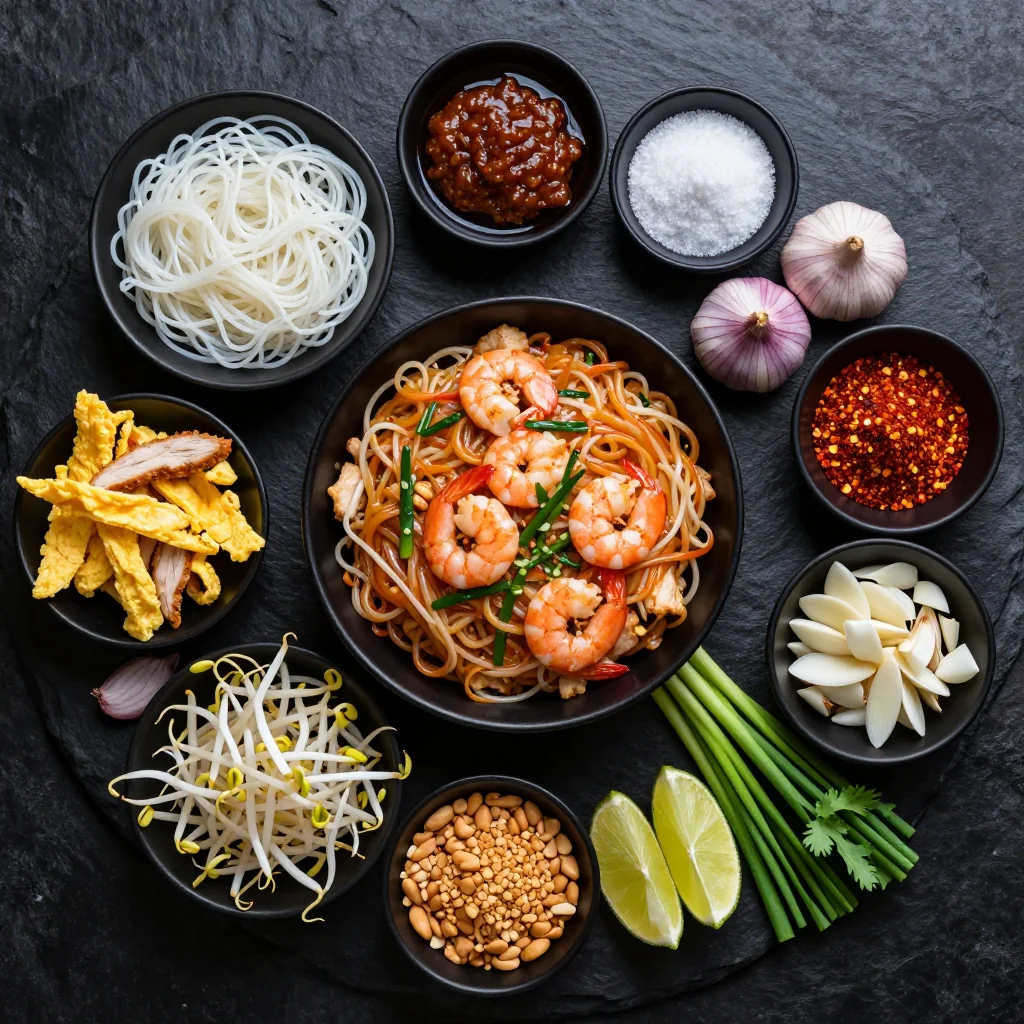
Rice Noodles (8 oz): Look for ¼-inch wide “pad thai” or “banh pho” sticks. Wider ones turn gummy; thinner ones dissolve. Buy from Asian grocers or the international aisle; they cost pennies and last forever in a zip bag.
Chicken (2 cups, cooked): Breast is lean, thigh is lush. Rotisserie is week-night gold, but if you’re starting raw, slice 2 breasts and sear 3 minutes per side in a smoking-hot wok, then set aside.
Tamarind Concentrate (3 Tbsp): The soul of pad thai. Avoid “tamarind sauce” (too sweet) and blocks (too messy). The thick, dark concentrate in a jar keeps a year in the fridge.
Palm Sugar (2 Tbsp): Coconutty complexity you can’t get from white sugar. Sub light brown in a pinch, but visit the Asian market once and you’ll be hooked.
Fish Sauce (2 Tbsp): Red Boat or Three Crabs brands smell scary but mellow into salty umami heaven. Vegan? Use 1½ Tbsp soy + ½ Tbsp mushroom powder.
Vegetable Oil (2 Tbsp): Peanut oil adds fragrance, but any neutral high-heat oil works. Save the sesame oil for finishing; its smoke point is too low for stir-fry.
Garlic Chives (¼ cup): Flat, grassy, milder than regular chives. Find them bundled in the herb section; if unavailable, scallion greens plus a whisper of minced garlic mimic them.
Bean Sprouts (1 cup): Buy the day-of for maximum crunch. Store in icy salted water; they’ll perk back up like a bouquet.
Eggs (2 large): Free-range, room-temp eggs scramble silkier. Crack into a teacup first so you can slide them in fast.
Lime (1, cut into cheeks): The acid high note that makes the whole dish sing. Roll on the counter before slicing to double the juice.
Crushed Peanuts (¼ cup): Dry-roasted, unsalted. Pulse briefly; you want gravel, not dust. Sunflower or cashew swaps keep it allergy-friendly.
How to Make Quick Chicken Pad Thai That Is Takeout Style
Soak the noodles
Place rice noodles in a heat-proof bowl. Cover with very hot tap water and let stand 12 minutes while you prep everything else. They should be supple but still a touch firm; they’ll finish cooking in the sauce. Drain and set aside.
Whisk the sauce
In a glass measuring cup, combine tamarind concentrate, palm sugar, fish sauce, soy sauce, and a pinch of white pepper. Microwave 20 seconds to melt the sugar; whisk until satiny smooth. Taste: it should be equal parts sweet, sour, and salty. Adjust with drops of lime or pinches of sugar until you can’t stop sipping it.
Sear the aromatics
Heat wok over high until a bead of water evaporates in 1 second. Add oil, swirl to coat, then dump in minced shallot and pressed garlic. Stir-fry 15 seconds—just until you smell popcorn, not browning.
Push and scramble eggs
Scrape aromatics up the sides to make a well. Pour in beaten eggs; let set 5 seconds, then draw a spatula through to create soft curds. Work fast so garlic doesn’t burn.
Add chicken and noodles
Toss in cooked chicken and the drained noodles. Use tongs to lift and separate so every strand gets kissed by oil and egg.
Paint with sauce
Pour the glossy tamarind mixture around the edges of the wok (hotter surface = caramelization). Toss continuously for 90 seconds until noodles absorb the sauce and take on mahogany edges.
Fold in sprouts and chives
Add half the bean sprouts and all the garlic chives. Stir just until sprouts turn translucent but still crunch—about 30 seconds. Overcooking = soggy sadness.
Finish and plate
Turn off heat. Sprinkle peanuts, squeeze fresh lime, shower with remaining raw sprouts for textural pop. Serve instantly—pad thai waits for no one.
Expert Tips
Hot wok, cold oil
Heat the pan first until wisps of smoke appear, then add oil. This prevents sticking and gives you restaurant-level “wok hei” breath.
Don’t drown the noodles
If the mixture feels dry, splash 1 Tbsp water around the edges, not on top—steam will loosen without washing away flavor.
Prep parade
Stir-fries punish slow preppers. Line up ingredients in the order they enter the pan; the actual cooking is a 4-minute sprint.
No wok, no cry
A 12-inch stainless or cast-iron skillet works—just crank the burner and avoid non-stick (it can’t handle the high heat).
Color cue
If noodles look pale, keep tossing—caramelized sugar darkens them. If they look muddy, you’ve added too much soy; brighten with extra lime.
Tamarind swap
In a pinch, mix 2 Tbsp rice vinegar + 1 Tbsp ketchup + 1 tsp molasses. It’s not Bangkok, but it’ll satisfy the craving.
Variations to Try
-
Shrimp Pad Thai
Swap chicken for 8 oz peeled shrimp; sear 1 minute per side and proceed.
-
Tofu Vegan
Use firm tofu pressed 15 minutes; add 1 tsp mushroom powder for umami.
-
Spicy Kimchi
Fold in ½ cup chopped kimchi with the sprouts; drizzle with gochujang-lime mayo.
-
Low-Carb Zoodle
Replace half the noodles with spiralized zucchini; add during the last 30 seconds to prevent waterlogging.
-
Rainbow Veggie
Add julienned red pepper and carrot when you add the chicken for built-in meal-prep veggies.
Storage Tips
Fridge: Cool leftovers within 2 hours and stash in an airtight glass container 3 days max. The noodles continue to absorb sauce, so revive with a sprinkle of water and a 60-second blast in a hot skillet—not the microwave (it turns rubbery).
Freezer: Freeze sauce-coated chicken and noodles separately from fresh garnishes. Press flat in zip bags, exclude air, and freeze up to 2 months. Thaw overnight in the fridge; reheat in a wok with a splash of water and fresh sprouts for crunch.
Meal-prep lunchboxes: Portion 1¼ cups pad thai into 4-cup boxes. Add a tiny snack-size zip bag of peanuts and a lime wedge; refrigerate 4 days. Keeps office kitchens jealous.
Frequently Asked Questions
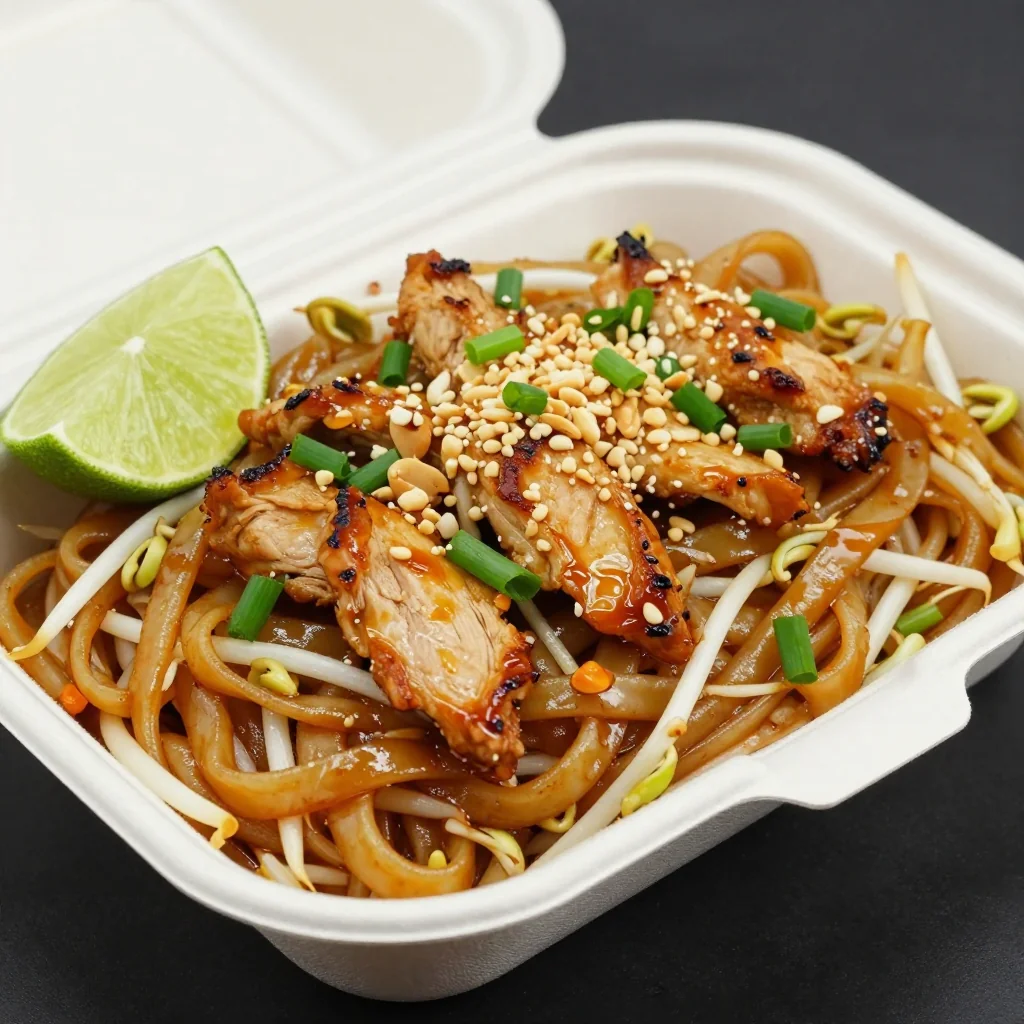
Quick Chicken Pad Thai That Is Takeout Style
Ingredients
Instructions
- Soak noodles: Cover noodles with very hot water 12 min; drain.
- Mix sauce: Whisk tamarind, sugar, fish sauce, soy, and white pepper until sugar dissolves.
- Stir-fry aromatics: Heat wok on high, add 1 Tbsp oil, garlic, and shallot 15 sec.
- Scramble eggs: Push aromatics aside, add eggs, scramble 30 sec.
- Combine: Add chicken and drained noodles; toss 1 min.
- Sauce and finish: Pour sauce around edges; toss 90 sec. Add half the sprouts and all the chives; cook 30 sec more.
- Serve: Plate immediately, top with remaining sprouts, peanuts, and lime.
Recipe Notes
For gluten-free, use Tamari instead of soy. Sauce keeps 2 weeks refrigerated or 3 months frozen in cubes.