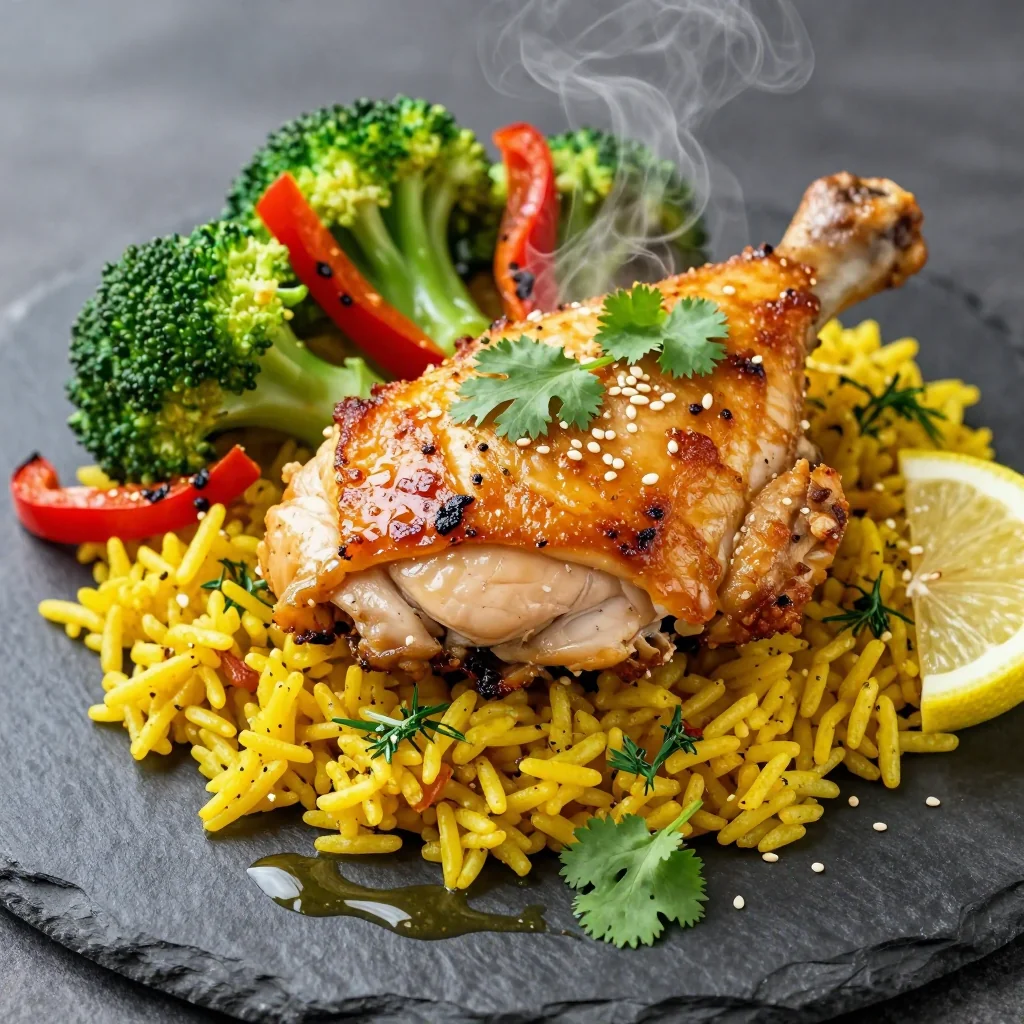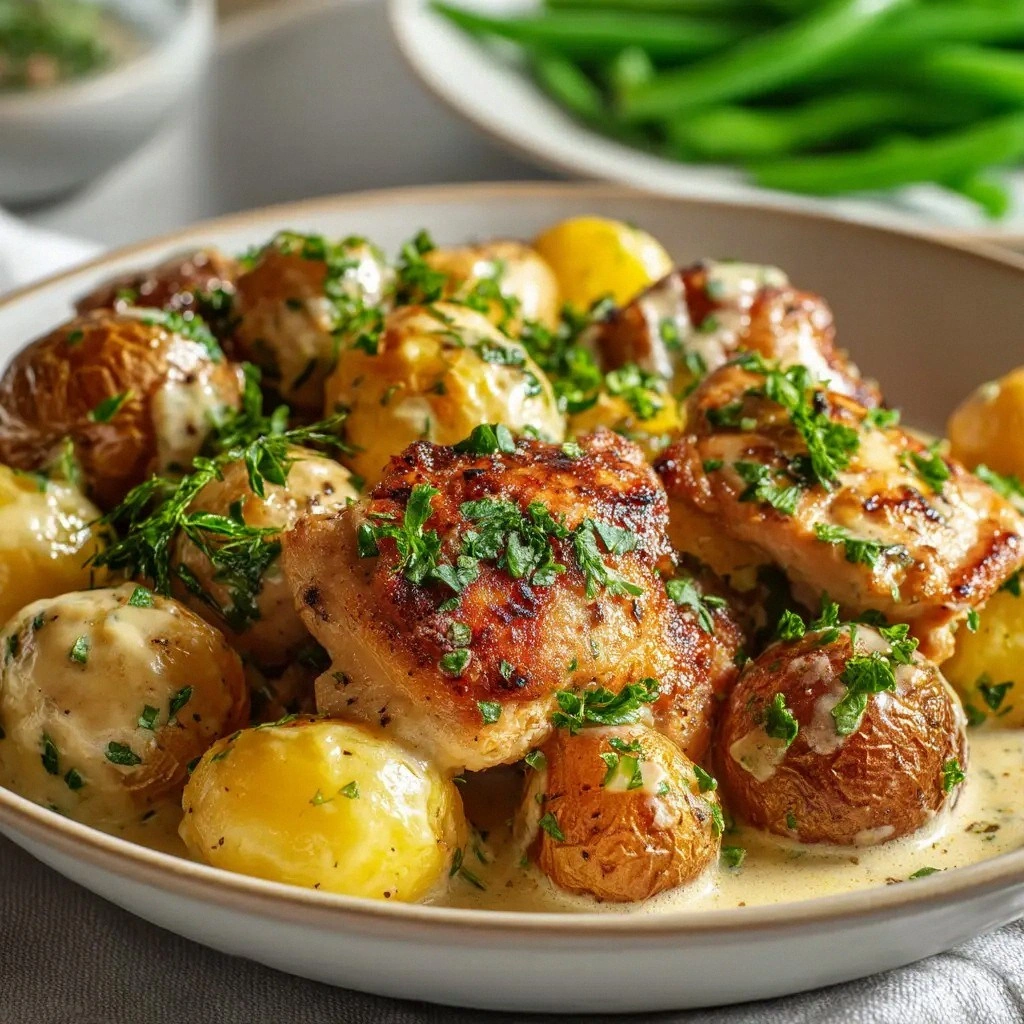
Picture this: a cramped kitchen, the clock ticking, and the smell of garlic and butter already flirting in the air. I was halfway through a dinner that had already turned into a disaster—one of those moments when the potatoes keep sticking to the pan and the chicken ends up looking like a sad, dry bird. I stared at the sizzling mess, then decided, “Enough is enough.” That was the spark that ignited my obsession with this recipe, and it’s the same spark that I want to pass on to you.
The first bite was a revelation. The chicken was juicy, the potatoes were golden and crisp on the outside, tender inside, and the Parmesan coating had that irresistible, buttery crunch that makes you want to lick the pan. The garlic was mellow, not overpowering, and the herbs added a subtle earthiness that lifted the dish from ordinary to unforgettable. Every bite was a bite of comfort, a bite of pure, unapologetic flavor that felt like a hug in a bowl. I knew then that I had stumbled upon something special, something that would become a staple in my kitchen.
What makes this version stand out from the countless garlic parmesan chicken recipes you’ll find online? It’s the balance of technique and ingredient selection that turns a simple one‑pan meal into a showstopper. The chicken thighs, not breasts, stay moist and tender, while the potatoes absorb the savory butter‑garlic sauce without falling apart. The Parmesan coating is not just a garnish; it’s a flavor layer that crisps beautifully and adds a rich umami punch. And the secret? A dash of red pepper flakes for a subtle kick and a final flourish of fresh parsley for that bright, herbaceous finish. I dare you to taste this and not go back for seconds.
This is hands down the best version you’ll ever make at home. I’ve tried dozens of variations, from stovetop to oven, and none have matched the harmony of textures and flavors in this dish. I’ll be honest—after the first plate, I ate half the batch before anyone else even got a taste. If you've ever struggled with this, you're not alone—and I've got the fix. Stay with me here—this is worth it.
What Makes This Version Stand Out
- Flavor: The combination of garlic, Parmesan, and herbs creates a depth that’s both comforting and sophisticated, elevating a simple one‑pan meal into a culinary highlight.
- Texture: The chicken stays succulent while the potatoes develop a crisp exterior, thanks to the high‑heat searing technique that locks in juices.
- Simplicity: With only one pan and a handful of ingredients, you can go from prep to plate in under an hour, making it perfect for busy weeknights.
- Uniqueness: The subtle heat from red pepper flakes adds a playful edge that most garlic‑parmesan recipes omit.
- Ingredient Quality: Using boneless, skinless chicken thighs and Yukon Gold potatoes ensures tenderness and flavor that can’t be replicated with lower‑grade produce.
- Make‑Ahead Potential: The dish can be pre‑assembled and baked later, making it ideal for meal‑prep enthusiasts.
Alright, let’s break down exactly what goes into this masterpiece.
Inside the Ingredient List
The Flavor Base
The foundation of this dish is the aromatic blend of garlic, olive oil, and butter. Garlic infuses the entire plate with a mellow, sweet undertone that’s never cloying. Olive oil provides a silky canvas that helps the butter melt evenly, while the butter itself adds a rich, velvety depth. If you skip any of these, you lose a layer of complexity that makes the dish feel whole. The synergy of these three ingredients is what turns simple potatoes and chicken into a mouth‑watering experience.
Why use olive oil over regular cooking oil? Olive oil’s lower smoke point means it doesn’t burn as quickly, allowing the garlic to release its flavor without turning bitter. The butter, on the other hand, adds a golden crust that crisps the potatoes and gives the chicken a savory finish. Together, they create a sauce that coats every bite like velvet. If you’re allergic to dairy, you can substitute the butter with a plant‑based butter for a similar mouthfeel.
The Texture Crew
Yukon Gold potatoes are the perfect medium‑starch choice for this dish. Their creamy interior melts just enough to stay tender, while their skin crisps beautifully when exposed to the high heat of the pan. The choice of potatoes directly influences the mouthfeel; if you use waxy potatoes, the dish will turn out rubbery, whereas starchy varieties will be mushy.
Chicken thighs are the star of the show, offering a higher fat content that keeps the meat juicy. Their marbled texture contrasts with the crisp potatoes, creating a satisfying bite. If you prefer a leaner cut, you can use breast meat, but be prepared for a drier result. The key to juicy thighs is to sear them first, locking in the juices before the oven does the rest.
The Parmesan cheese acts as the final textural layer, forming a golden crust that’s both crunchy and flavorful. Its high salt content also balances the dish, preventing it from feeling bland. If you’re lactose intolerant, a vegan Parmesan alternative will provide a similar texture and flavor profile. The combination of these textures makes each bite a delightful experience.
The Unexpected Star
Red pepper flakes are the secret weapon that elevates this dish from good to unforgettable. They add a subtle heat that’s noticeable but not overpowering, giving the dish a modern twist. The flakes also help to caramelize the butter, creating a deeper flavor profile. If you’re a heat‑connoisseur, feel free to increase the amount; if you’re a spice‑skeptic, reduce it to a pinch.
Fresh parsley is the final flourish that brightens the dish and adds a pop of color. It also offers a fresh, herbaceous note that balances the richness of the cheese and butter. The parsley’s slight peppery bite cuts through the heaviness, leaving a clean finish on the palate. A sprinkle of fresh parsley right before serving is the last step that turns a good meal into a memorable one.
The Final Flourish
The dried herbs—parsley, oregano, and thyme—create a layered aromatic base that permeates the dish. Each herb brings a unique profile: oregano offers a warm, slightly bitter note; thyme adds subtle earthiness; dried parsley provides a gentle, peppery undertone. These herbs are added early in the cooking process, allowing them to release their flavors into the butter‑garlic sauce.
The salt and black pepper are the unsung heroes that bring everything together. Salt enhances the natural flavors of the chicken and potatoes, while pepper adds a subtle kick that awakens the taste buds. The balance of these seasonings is crucial; too much salt will overpower, too little will leave the dish flat. A pinch of black pepper also helps to slightly caramelize the edges of the potatoes, adding an extra layer of texture.
Everything’s prepped? Good. Let’s get into the real action.
The Method — Step by Step
- Preheat your oven to 425°F (220°C). While the oven warms, cut the potatoes into 1-inch cubes, ensuring they’re all roughly the same size for even cooking. Pat them dry with a clean towel to remove excess moisture; this step is critical for crispiness. Toss the potato cubes in half of the olive oil, butter, and the garlic, making sure each piece is well coated. Lay the potatoes in a single layer on a large, rimmed baking sheet or a heavy skillet; the pan should be wide enough so the potatoes aren’t overcrowded.
- Place the pan in the preheated oven and bake for 10 minutes. After ten minutes, remove the pan and flip the potatoes with a spatula; this ensures even browning on all sides. Return the pan to the oven and bake for another 10 minutes, or until the potatoes are golden brown and tender. The key is to keep the heat high so the edges become crispy while the interior stays fluffy. If you’re using a skillet, keep an eye on the temperature to avoid burning.
- While the potatoes are roasting, season the chicken thighs with salt, pepper, oregano, thyme, and a pinch of red pepper flakes. In a large skillet, heat the remaining olive oil over medium‑high heat. Add the chicken thighs skin‑side down (if they still have skin) and sear for 4–5 minutes until the skin is golden and crisp. Flip the thighs and sear the other side for another 3–4 minutes. This searing step locks in juices and creates a caramelized crust that complements the buttery potatoes.
- Once the chicken is seared, remove it from the skillet and set it aside on a plate. In the same skillet, add the remaining butter and the grated Parmesan cheese. Let the cheese melt into the butter, creating a silky sauce that will coat the chicken and potatoes. Stir frequently to prevent the butter from separating. The sauce should be smooth and glossy, indicating that the cheese has fully incorporated.
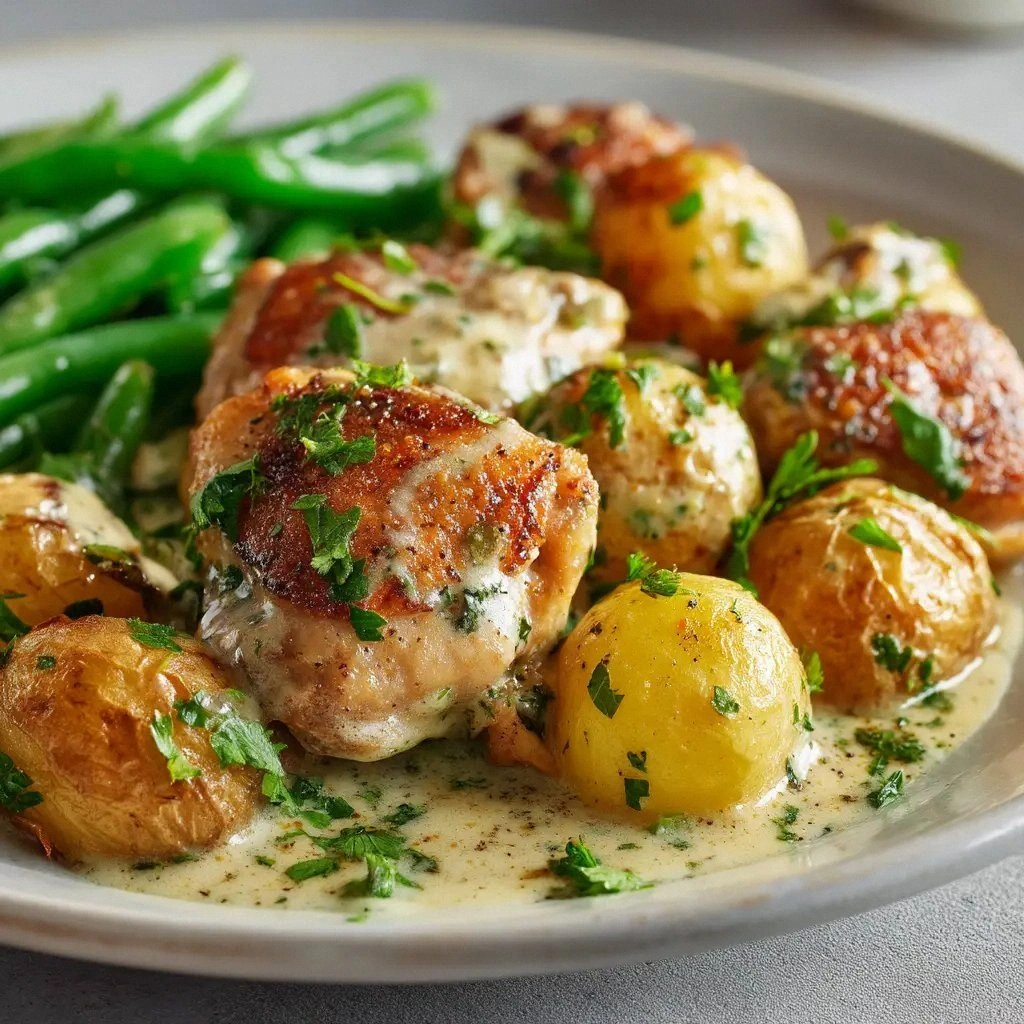
- Return the chicken thighs to the skillet, nestling them among the potatoes. Pour the Parmesan‑butter sauce over the entire dish, ensuring every piece is coated. Sprinkle the remaining dried herbs and red pepper flakes evenly. This is the moment of truth—watch the aromas rise as the flavors meld together. The dish should look like a golden, savory mosaic.
- Transfer the skillet or baking sheet back to the oven and bake for an additional 15–20 minutes, or until the chicken reaches an internal temperature of 165°F (74°C). The potatoes should be crisp on the outside and soft inside, while the chicken remains juicy and flavorful. The final 10 minutes of baking will give the Parmesan crust a perfect golden hue.
- Remove the dish from the oven and let it rest for 5 minutes. Resting allows the juices to redistribute throughout the chicken, ensuring each bite stays moist. While it rests, sprinkle fresh parsley over the top for a burst of color and freshness. The parsley’s bright green hue contrasts beautifully with the golden crust, making the dish visually stunning.
- Serve immediately, plating the chicken and potatoes together for a rustic presentation. Pair the dish with a crisp white wine or a light beer to cut through the richness. The combination of savory, buttery flavors with a hint of heat and herbaceous freshness makes this meal a crowd‑pleaser. I dare you to taste this and not go back for seconds.
That’s it — you did it. But hold on, I’ve got a few more tricks that will take this to another level.
Insider Tricks for Flawless Results
The Temperature Rule Nobody Follows
Many cooks think a lower oven temperature is gentler, but it actually prolongs the cooking time and can cause the potatoes to steam rather than crisp. A high heat of 425°F (220°C) ensures that the outer layer of the potatoes gets that coveted crunch while the interior remains fluffy. If you’re using a convection oven, reduce the temperature by 25°F to avoid over‑browning. Always preheat the oven for at least 10 minutes before adding the dish.
Why Your Nose Knows Best
The aroma of garlic and butter is a clear indicator that the dish is on the right track. When the butter starts to turn golden and the garlic releases its scent, you’re in the sweet spot. If the smell becomes bitter, it’s time to lower the heat. Trust your nose; it’s a reliable guide to flavor balance.
The 5-Minute Rest That Changes Everything
Letting the dish rest for five minutes after baking is not just a formality. The rest period allows the juices to redistribute, preventing a dry bite. It also gives the Parmesan crust a chance to set, so it doesn’t crumble when you pick up a piece. I’ve seen people skip this step and end up with a soggy mess.
Avoiding the Sticky Situation
If the potatoes stick to the pan, the problem is usually excess moisture or a pan that’s not hot enough. Pat the potatoes dry before seasoning, and use a wide, heavy skillet to spread them out. If you’re using a non‑stick pan, add a tablespoon of oil to ensure a crisp finish. A well‑heated pan is the secret to a perfect crunch.
The Final Touch of Freshness
A handful of fresh parsley at the end not only adds color but also a burst of herbaceous freshness that brightens the dish. Fresh herbs also release their essential oils when sprinkled, giving a subtle aroma that makes the dish feel fresh. If you’re short on parsley, a squeeze of lemon juice can provide a similar brightening effect.
Creative Twists and Variations
This recipe is a playground. Here are some of my favorite ways to switch things up:
Smoky Chipotle Version
Swap the red pepper flakes for chipotle powder for a smoky depth that pairs perfectly with the Parmesan. Add a splash of smoked paprika to the sauce for an extra layer of flavor. This version is ideal for fans of a more robust, smoky profile. The result is a dish that feels like a warm, smoky hug.
Herb‑Infused Lemon Twist
Add lemon zest to the butter sauce for a bright, citrusy note that cuts through the richness. Finish the dish with a squeeze of fresh lemon juice before serving. The lemon brightens the dish and adds a refreshing contrast. This variation works well for a light summer dinner.
Mediterranean Spin
Replace the Parmesan with crumbled feta for a tangy Mediterranean flavor. Toss the potatoes with olives and capers for an extra burst of briny goodness. The result is a dish that feels like a sunny Mediterranean brunch. It’s a crowd‑pleaser at any gathering.
Crispy Chicken Tenders
Instead of thighs, use boneless chicken tenders for a lighter version. Coat the tenders in a mixture of breadcrumbs and Parmesan before searing. This gives a crunchy exterior while maintaining the buttery interior. The dish becomes a fun, finger‑friendly meal for kids.
Low‑Carb Keto Variation
Swap the Yukon Gold potatoes for cauliflower florets. Roast the cauliflower with the same butter‑garlic sauce for a low‑carb alternative. The cauliflower takes on the buttery flavor beautifully. This version is perfect for those watching their carb intake.
Storing and Bringing It Back to Life
Fridge Storage
Store leftovers in an airtight container in the refrigerator for up to 3 days. The dish retains its flavor, though the crispy texture may soften slightly. To keep the potatoes crisp, reheat them in a skillet rather than the microwave. A quick sear on the stove restores the golden crust.
Freezer Friendly
Freezing works best before baking. Assemble the dish in a freezer‑safe container, then bake from frozen at 425°F (220°C) for 30–35 minutes. The potatoes will stay tender, and the chicken will be juicy. This method is great for meal prep and busy weeknights.
Best Reheating Method
Reheat in a preheated oven at 375°F (190°C) for 10–12 minutes, or until heated through. Add a splash of water or broth before reheating to keep the potatoes from drying out. The butter sauce will thicken slightly, creating a luscious coating. The end result is a dish that tastes almost brand new.