I was staring at my kitchen counter, surrounded by a jumble of vegetables that had somehow escaped the grocery list, when a friend dared me to whip up something that could make a crowd go from “meh” to “wow” in seconds. I laughed, because I’ve been told that French cuisine is all about the sauce, but what if the sauce is simply a clever dressing that turns humble potatoes and green beans into a showstopper? That night, the aroma that filled the air was a marriage of citrus, olives, and herbs that made my nose do a double-take. The texture was a play of tender potatoes, crisp green beans, and a silky vinaigrette that clung to each bite like velvet. And the best part? It was all done in under an hour, with a handful of ingredients that you probably already have.
I’m not just talking about a recipe; I’m talking about a culinary revelation that has the power to turn an ordinary dinner into a memorable event. Picture yourself pulling this dish out of the pot, the whole kitchen smelling incredible, and your guests reaching for seconds because I dare you to taste this and not go back for more. I’ve tried countless potato salads, and most of them are either too heavy or too bland, but this one hits the sweet spot with a bright, tangy dressing that lifts the entire plate. The secret lies in the balance of acidity and oil, the subtle crunch of fresh herbs, and the surprise burst of black olives that adds depth without overpowering. If you’ve ever struggled with making a potato dish that feels special, you’re not alone — and I’ve got the fix.
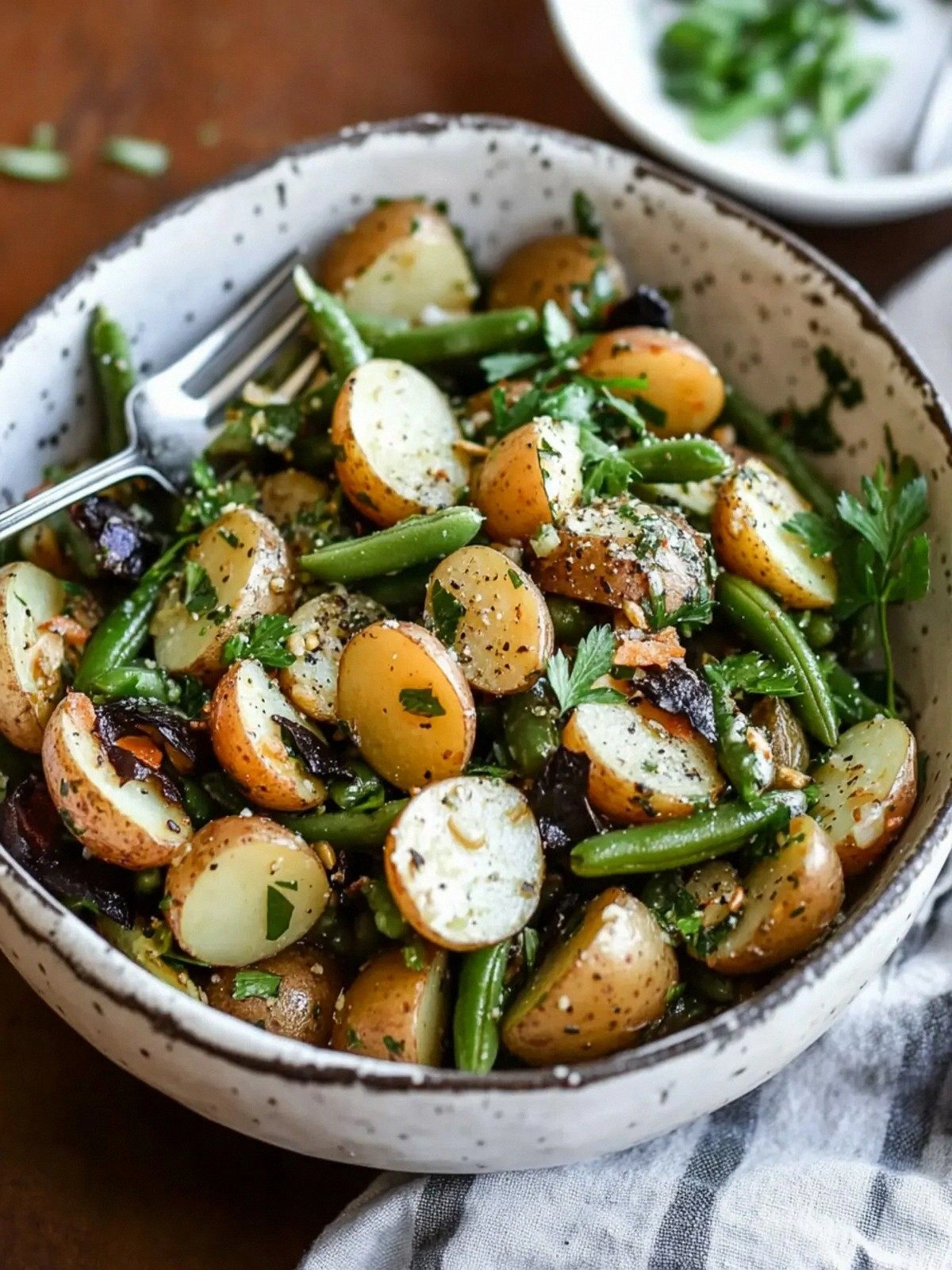
This version stands out because I’ve taken a traditional French-style potato salad and injected it with a modern twist that makes it both comforting and sophisticated. The potatoes are boiled to a tender yet firm consistency, preventing the dreaded mush that can ruin the entire dish. The green beans are blanched just enough to keep their bright color and snap, creating a textural contrast that keeps the palate engaged. The dressing, a blend of extra virgin olive oil, lemon juice, white wine vinegar, and Dijon mustard, is whisked until it emulsifies into a silky coating that adheres to every ingredient. The addition of black olives and capers adds a briny depth that feels like a secret ingredient from a Parisian bistro. Together, they form a harmonious medley that is both simple and unforgettable.
By the end of this post, you’ll wonder how you ever made it any other way, because I’m about to walk you through every single step with a confidence that comes from having tested this dish dozens of times. The next section will break down exactly what makes this masterpiece so irresistible, and then we’ll dive into the ingredient list to understand why each component matters. Ready to elevate your potato game? Let’s get started.
What Makes This Version Stand Out
- Texture: The potatoes are boiled to a perfect al dente, providing a firm bite that contrasts beautifully with the tender green beans. The careful timing ensures they don’t fall apart, which is a common pitfall in many potato salads. This balance creates a satisfying mouthfeel that keeps diners coming back for more.
- Acidity: Lemon juice and white wine vinegar cut through the richness of the olive oil, giving the dish a bright, refreshing lift. The acidity also helps to preserve the vibrant color of the green beans. It’s a subtle yet powerful component that elevates the entire flavor profile.
- Herb Brightness: Fresh flat parsley and chives add a pop of green that not only enhances visual appeal but also injects a fresh, herbal note. Their delicate flavors complement the olives and capers without overpowering them. This herbaceous layer is a signature touch that sets the dish apart.
- Olive Oil Quality: Using a high‑quality extra virgin olive oil gives the dressing a silky texture and a complex flavor that’s harder to replicate with generic oils. It also helps the dressing cling to the potatoes and beans, ensuring every bite is coated. The result is a dressing that feels luxurious yet approachable.
- Briny Accents: Black olives and capers add a savory punch that balances the citrusy dressing. Their salty depth provides a contrast that makes each bite exciting. This briny element is often missing in standard potato salads, giving this version a unique edge.
- Ease of Preparation: All steps can be completed in under 45 minutes, making it ideal for week‑night dinners or last‑minute gatherings. The method is straightforward, with no complicated techniques required. This practicality is a major win for busy cooks.
- Make‑ahead Friendly: The dish actually tastes better the next day because the flavors have time to meld. This makes it perfect for potlucks, picnics, or any event where you want to prep ahead. The ability to store and reheat without losing quality is a huge plus.
- Versatility: It serves as a side dish, a main course when paired with protein, or a light lunch. The ingredients can be swapped or adjusted to accommodate dietary preferences. This flexibility means it can fit into almost any menu.
Inside the Ingredient List
The Flavor Base
The dressing is the heart of this dish, combining extra virgin olive oil, lemon juice, white wine vinegar, Dijon mustard, and a splash of garlic. Each component plays a distinct role: the oil brings richness and helps the dressing coat the ingredients, while the lemon juice and vinegar provide bright acidity that cuts through the heaviness. The Dijon mustard acts as an emulsifier, binding the oil and acid into a smooth, velvety sauce. Adding a small clove of minced garlic gives a subtle warmth that lifts the overall flavor. If you skip the mustard, the dressing will still taste good but lack that silky texture that makes each bite feel cohesive.
The quality of the olive oil is paramount; a high‑grade extra virgin oil will give a fruity finish that pairs well with the citrus. A cheaper oil can taste flat and muddy, ruining the delicate balance of flavors. For those who prefer a vegan version, simply replace the Dijon mustard with a plant‑based alternative. The result will still be creamy and emulsified, though the flavor profile will shift slightly. Remember, the dressing is meant to coat, not drown, so keep the ratios in check to avoid an overly oily dish.
If you’re craving a deeper umami punch, a dash of soy sauce or Worcestershire sauce can be added to the dressing. However, this will change the classic French feel, so use it sparingly. Another tweak is to substitute lemon juice with lime juice for a slightly sweeter, tropical edge. This works best if you’re pairing the salad with grilled fish or seafood. Ultimately, the base remains a testament to how simple ingredients can create complex flavors.
The Texture Crew
The potatoes are the cornerstone of the dish, and their texture is everything. Boiling them until just tender ensures they hold their shape and provide a satisfying bite. Overcooked potatoes become mushy and lose the structure that allows the dressing to cling. A quick test: insert a fork; it should glide in with a slight resistance. This small detail sets the stage for the rest of the dish.
Green beans add a crispness that balances the softness of the potatoes. Blanching them for 2-3 minutes in salted water preserves their bright green hue and snap. If you prefer a softer bean, reduce the blanching time or skip it altogether. The beans should still retain a slight crunch to contrast with the tender potatoes. Their fresh, green flavor also acts as a palate cleanser between bites.
The olives and capers provide a briny, chewy texture that breaks the monotony. Black olives, sliced thin, release their oils and add a subtle chewiness, while capers bring a crunchy, peppery bite. Together, they create a multi‑sensory experience that keeps the dish interesting. If you’re not a fan of olives, you can replace them with sun‑dried tomatoes for a sweet, chewy alternative. This substitution will alter the flavor profile but maintain the textural contrast.
Eggs, boiled to a firm consistency and diced, contribute a protein boost and a creamy texture. They also add a subtle richness that balances the acidity of the dressing. Cutting the eggs into small cubes ensures they don’t dominate the dish but still provide a satisfying bite. If you’re vegan, simply omit the eggs and add a handful of chickpeas for protein. The result will be lighter but still delicious.
The Unexpected Star
Capers are often overlooked in French‑style salads, but they bring a burst of flavor that’s both salty and slightly citrusy. Their small, firm shape makes them a delightful contrast to the soft potatoes. Adding them early in the mixing process allows the flavors to meld, but if you add them too late, they may lose their texture. Capers also have a natural preservative effect, which can help extend the shelf life of the dish. For a different twist, try using pickled ginger instead; it offers a sweet and spicy kick.
Garlic is a versatile ingredient that can be minced, sliced, or roasted. In this recipe, it’s minced finely to distribute its aroma evenly. Garlic adds depth without overwhelming the other flavors, and its subtle heat keeps the dish from feeling flat. If you’re sensitive to raw garlic, you can lightly sauté it before adding to the dressing to mellow the bite. The end result is a balanced, aromatic base that elevates the entire salad.
Fresh herbs, specifically flat parsley and chives, are the final flourish that brings the dish together. They add a bright green color that makes the salad visually appealing and a fresh, herbal note that lifts the flavors. Chives provide a mild onion flavor, while flat parsley offers a clean, slightly peppery taste. Using fresh herbs rather than dried ensures maximum flavor and a vibrant color. If you’re out of fresh herbs, dried ones can work, but use only half the amount to avoid bitterness.
The Final Flourish
Salt and pepper are the finishing touches that bring all the elements together. The recipe calls for 1 tablespoon of salt and 0.5 teaspoon of freshly ground black pepper, ensuring the dish is seasoned without being cloying. Salt enhances each ingredient’s natural flavor, while pepper adds a subtle heat that rounds out the dish. Be mindful not to over‑salt; taste as you go to achieve the perfect balance. A pinch of salt can be added at the very end to fine‑tune the seasoning.
The combination of black olives, capers, and fresh herbs creates a layered flavor profile that feels both classic and contemporary. Each bite offers a different experience: the crunch of the beans, the chew of the olives, the creaminess of the eggs, and the bright zing of the dressing. The result is a dish that feels effortless yet sophisticated, making it ideal for any occasion. Whether you’re serving it as a side or a main, this salad is guaranteed to impress.
Everything's prepped? Good. Let's get into the real action.
The Method — Step by Step
- Begin by filling a large pot with water, adding a generous pinch of salt, and bringing it to a rolling boil. Drop in the new potatoes, ensuring they’re fully submerged. Cook for 10-12 minutes, or until a fork slides in with a slight resistance. Drain immediately and rinse under cold water to halt the cooking process; this keeps the potatoes firm and prevents them from becoming gummy. Pat them dry with a clean towel before cutting.
- While the potatoes are cooling, bring a separate pot of salted water to a boil and add the green beans. Blanch them for 2 minutes, then transfer them to an ice bath to preserve their bright green color and crispness. Drain and slice the beans in half lengthwise for easier mixing later. The beans should still feel slightly firm, offering a delightful snap with every bite.
- In a small bowl, whisk together the extra virgin olive oil, lemon juice, white wine vinegar, Dijon mustard, minced garlic, and a pinch of salt. The mixture should emulsify into a thick, glossy dressing that can coat the potatoes. If the dressing doesn’t come together, add a teaspoon of water and whisk again. This step is crucial for achieving that silky coat that makes the dish feel luxurious.
- Hard‑boil the eggs by placing them in a saucepan, covering with water, and bringing to a gentle boil. After 10 minutes, remove the eggs and plunge them into an ice bath to stop the cooking process. Peel the eggs and dice them into small cubes. The eggs should be firm but not dry, providing a creamy contrast to the potatoes.
- Combine the cooled potatoes, blanched beans, diced eggs, sliced black olives, and capers in a large mixing bowl. Pour the dressing over the mixture, gently tossing to coat every component. The goal is a uniform coating that ensures each bite is flavorful. Taste and adjust the seasoning, adding more salt or pepper if needed.
- Sprinkle the fresh flat parsley and chives over the salad, then give it a final gentle toss. These herbs not only add color but also provide a fresh, bright flavor that balances the richness of the dressing. If you’re adding extra herbs, do so in small increments to avoid overwhelming the dish.
- Cover the bowl with plastic wrap and refrigerate for at least 30 minutes to allow the flavors to meld. The salad tastes best after the dressing has had time to infuse into the potatoes and beans. If you’re preparing this in advance, you can store it in an airtight container for up to 2 days.
- Just before serving, give the salad a final stir and taste. Adjust the seasoning if needed, adding a splash more lemon juice or a pinch more salt. Serve chilled or at room temperature, depending on your preference. This dish is perfect for a summer picnic or a cozy dinner.
- To elevate the presentation, garnish with a few extra olives or a sprinkle of chopped parsley on top. The visual appeal adds a touch of elegance that makes the dish feel special. Enjoy the compliments that will flow as soon as you plate this masterpiece.
That’s it — you did it. But hold on, I’ve got a few more tricks that’ll take this to another level.
Insider Tricks for Flawless Results
The Temperature Rule Nobody Follows
Many cooks think that boiling water for potatoes is enough, but the temperature of the water matters. Start with water at a full boil; this ensures the potatoes cook evenly and quickly. If the water is too cool, the potatoes will develop a gummy texture. Keep the pot covered to maintain a steady heat and reduce cooking time.
Why Your Nose Knows Best
Before adding the dressing, give the mixture a quick sniff. If the oil smells flat or the lemon is too sour, adjust accordingly. Your sense of smell can detect imbalances that your eyes might miss. A well‑balanced dressing will have a bright citrus aroma that instantly lifts the dish.
The 5‑Minute Rest That Changes Everything
After mixing the salad, let it rest for 5 minutes before serving. This brief pause allows the flavors to meld and the dressing to settle. The potatoes will absorb the vinaigrette, creating a more cohesive taste. Skipping this step may leave the salad feeling under‑seasoned.
Keep the Beans Crisp
Blanch the beans just enough to keep them bright green. Over‑blanching will make them limp and lose their crunch. If you prefer a softer bean, blanch for an extra minute but don’t let them sit in hot water. The key is to stop the cooking process quickly by plunging them into an ice bath.
Eggs: The Secret Protein Boost
Hard‑boil the eggs with a splash of vinegar in the water; this helps the shells separate more easily. Peel them under running water to avoid sticking. Dice them into uniform cubes to ensure even distribution in the salad. If you’re avoiding eggs, replace them with a handful of chickpeas for a similar protein boost.
Use Fresh Herbs, Not Dried
Fresh parsley and chives bring a bright, vibrant flavor that dried herbs can’t match. They also add a pop of color that makes the dish visually appealing. If you’re out of fresh herbs, use dried ones sparingly, as they can be overpowering. The best result comes from using fresh, fragrant herbs.
Creative Twists and Variations
This recipe is a playground. Here are some of my favorite ways to switch things up:
Smoky Chipotle Twist
Add a teaspoon of chipotle in adobo for a smoky heat that pairs beautifully with the olives. Replace the lemon juice with lime for a fresher citrus note. This version is perfect for a summer barbecue where you want a little kick.
Herbal Mediterranean Fusion
Swap the parsley and chives for a mix of basil, oregano, and mint. Use Kalamata olives instead of black olives for a deeper flavor. This variation turns the dish into a Mediterranean staple that’s both refreshing and hearty.
Vegan Protein Boost
Omit the eggs and add a cup of roasted chickpeas for protein. Use a vegan Dijon mustard for the dressing. The chickpeas add a satisfying bite that mimics the texture of eggs, making the dish just as filling.
Buttery Roasted Garlic Flavor
Roast a whole head of garlic until caramelized, then squeeze the cloves into the dressing. The resulting garlic is sweet and mellow, providing a subtle depth. Pair this with a sprinkle of smoked paprika for an extra layer of flavor.
Winter Warmth with Roasted Root Vegetables
Replace the potatoes with roasted sweet potatoes for a sweeter, richer taste. Add a handful of roasted Brussels sprouts for crunch. This version is ideal for a cozy winter dinner that feels comforting and indulgent.
Asian-Inspired Variation
Swap the olive oil for sesame oil and add a splash of rice vinegar. Garnish with sliced scallions and toasted sesame seeds. The combination of flavors gives the dish an unmistakably Asian vibe that’s both bright and savory.
Storing and Bringing It Back to Life
Fridge Storage
Store the salad in an airtight container in the refrigerator for up to 2 days. Keep it chilled to maintain the crispness of the beans and the freshness of the herbs. If you notice the dressing separating, give the container a quick stir to re‑emulsify.
Freezer Friendly
Freezing is not recommended for this salad because the potatoes can become mushy. However, if you must freeze, keep the dressing separate and mix it in just before serving. This preserves the texture and prevents the potatoes from becoming soggy.
Best Reheating Method
To reheat, simply let the salad sit at room temperature for 20 minutes; this brings out the flavors without altering the texture. If you prefer a warm version, gently warm the salad in a saucepan over low heat, stirring occasionally. Add a splash of water or broth to keep the potatoes from drying out. The key is to avoid over‑heating, which will ruin the delicate balance of flavors.