Picture yourself standing in your kitchen, the scent of fresh salmon drifting through the air, a faint tang of citrus mingling with the savory aroma of seasoned breadcrumbs. I was in the middle of a frantic Sunday dinner prep when my phone buzzed with a text from a friend: “I dare you to make these salmon sticks and not crave a second plate.” I laughed, rolled up my sleeves, and dove into the recipe that would become the highlight of the evening. The moment the fish hit the hot oil, the sound of sizzling was a soundtrack that promised crisp edges and tender flesh inside—a culinary symphony that would play on repeat in my mind.
I’ll be honest—when I first tasted the first bite, I could barely keep a straight face. The exterior was a golden, crunchy shell that cracked like a brittle shell of a crustacean, while the inside was a buttery, flaky salmon that melted with a single bite. The zesty lemon‑garlic glaze coated the fish like a velvet ribbon, and the subtle hint of paprika added a smoky warmth that lingered long after the last bite. If you’ve ever struggled with fish sticks that turn out dry or soggy, you’re not alone. This version is hands down the best you’ll ever make at home.
What sets these sticks apart isn’t just the flavor—though the bright citrus and smoky paprika are a revelation—but the technique that locks in moisture while delivering a perfect crunch. I’ll walk you through every single step, from selecting the salmon to the final plating, so that by the end you’ll wonder how you ever made it any other way. And trust me, if you’re looking for a crowd‑pleaser that’s both simple and impressive, you’re in the right place.
But first, let’s talk about the one ingredient that will change everything: fresh lemon zest. Most recipes call for lemon juice, which can water down the coating. I’ve discovered that zest adds a burst of citrus aroma that stays in the coating, giving each bite a bright, fresh finish that lingers on the palate. Picture that citrus punch, followed by the buttery salmon and the satisfying crunch of panko—this is the flavor profile that will have your guests reaching for seconds.
What Makes This Version Stand Out
- Crunch: The use of panko breadcrumbs instead of standard breadcrumbs creates a light, airy texture that breaks into a satisfying snap.
- Moisture: A quick brine in salt water for five minutes keeps the salmon tender and prevents it from drying during frying.
- Flavor Depth: The combination of lemon zest, paprika, and garlic powder delivers a complex profile that feels both fresh and smoky.
- Speed: The entire prep takes less than 20 minutes, making it a go‑to for weeknight dinners or last‑minute parties.
- Make‑Ahead: The sticks can be assembled ahead of time, frozen, and fried straight from the freezer for instant gratification.
- Kid‑Friendly: The bite‑sized sticks are perfect for little hands and can be paired with a simple yogurt dip that kids love.
- Versatility: Serve as a main dish with a side salad, or as an appetizer with a tangy mayo sauce.
- Nutrition: Packed with protein and omega‑3s while keeping carbs and fats moderate.
Alright, let's break down exactly what goes into this masterpiece…
Inside the Ingredient List
The Flavor Base
Fresh Salmon Fillets (2 lbs): The heart of this dish, salmon brings a buttery texture and a rich, umami flavor that’s hard to beat. Freshness is key—look for firm flesh that doesn’t have a fishy odor. If you’re using pre‑cut fillets, ensure they’re still cold to maintain firmness during frying.
Lemon Zest (2 tbsp): This isn’t just a garnish; it’s a flavor powerhouse. The oils in the zest carry bright citrus notes that enhance the salmon’s natural flavor. Skip it and you’ll miss that fresh kick that keeps the dish from feeling heavy.
Salt (1 tsp) and Black Pepper (1 tsp): Simple seasoning that brings out the fish’s natural taste. Too much salt can dry the fish, so keep it moderate. Pepper adds a subtle heat that balances the citrus.
The Texture Crew
All-Purpose Flour (1 cup): The flour creates a dry base that helps the egg wash stick to the fish. If you’re gluten‑free, swap for a 1:1 gluten‑free flour blend.
Panko Breadcrumbs (1 cup): Panko is the secret to the airy crunch. Its larger, flakier crumbs don’t clump, so the coating stays light and crisp. If you’re craving extra flavor, toss in a tablespoon of grated Parmesan.
Beaten Eggs (2 large): The eggs act as a binder, ensuring the flour and breadcrumbs adhere to the salmon. Whisk them lightly with a splash of water to keep the coating silky.
The Unexpected Star
Olive Oil (2 tbsp): A high‑quality extra virgin olive oil adds a subtle fruity note and helps the coating crisp up evenly. If you prefer a neutral taste, you can use a light canola oil.
Optional Mayo Sauce (1/4 cup): For a creamy finish, mix mayo with a splash of lemon juice, a pinch of paprika, and a dash of hot sauce. The sauce coats the sticks like velvet, providing a cool contrast to the hot, crispy exterior.
Everything's prepped? Good. Let's get into the real action…
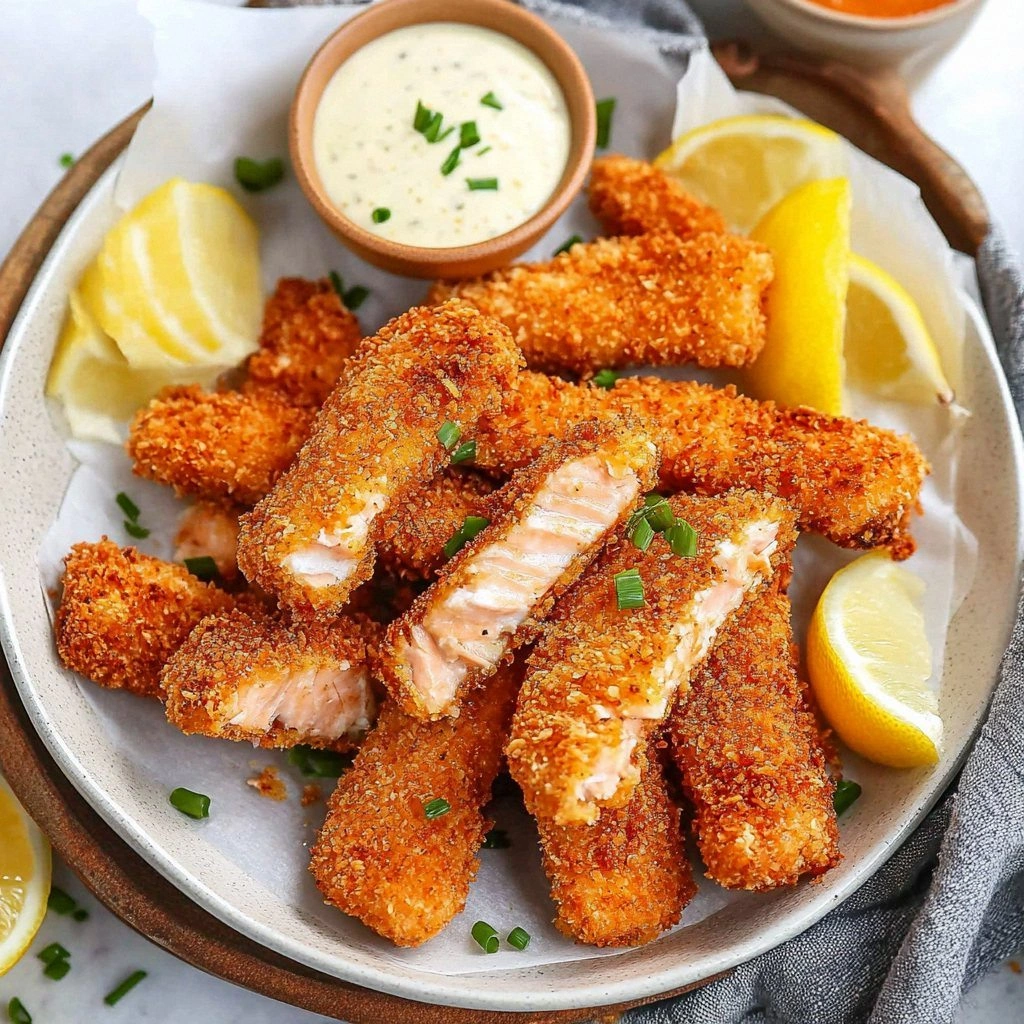
The Method — Step by Step
- Brine the Salmon: Dissolve 1 teaspoon of salt in 4 cups of cold water and submerge the salmon fillets for 5 minutes. This simple step hydrates the flesh, keeping it juicy during frying. After brining, pat the fillets dry with paper towels to ensure a crisp coating. The brine also adds a subtle savory backbone that balances the citrus zest.
- Slice into Sticks: Cut each fillet into 1‑inch thick strips. Uniform thickness ensures even cooking. If you prefer a thicker bite, go for 1.5 inches, but keep in mind the cooking time will increase slightly. The sticks should be about 2–3 inches long for a perfect bite‑size.
- Prepare the Breading Station: In one shallow dish, place the flour seasoned with salt, pepper, paprika, garlic powder, and parsley. In a second dish, beat the eggs with a splash of water. In a third dish, spread the panko breadcrumbs. Having a three‑step station makes the coating process quick and organized.
- Coat the Sticks: Dredge each salmon stick in the seasoned flour, tapping off excess. Then dip into the beaten eggs, letting any excess drip back into the bowl. Finally, roll in the panko breadcrumbs until fully coated. The double coating ensures a thick, crunchy shell that protects the fish during frying.
- Heat the Oil: Pour 2 tablespoons of olive oil into a large skillet over medium heat. When the oil shimmers but isn’t smoking, it’s ready. A good test is to drop a single breadcrumb; if it sizzles and turns golden within 30 seconds, the oil is at the right temperature.
- Fry the Sticks: Place the coated sticks in the hot oil, ensuring they don’t touch each other. Fry for 3–4 minutes on each side until golden brown and crispy. Flip gently with tongs to avoid breaking the coating. The interior should still feel slightly pink, indicating that it’s perfectly cooked.
- Drain on Paper Towels: Transfer the fried sticks to a plate lined with paper towels to absorb excess oil. Let them rest for a minute; the residual heat will finish cooking the inside.
- Optional Sauce: While the sticks rest, whisk the mayo sauce. The sauce should be smooth and slightly thick; adjust with a splash of lemon juice if too heavy. This sauce will coat the sticks like a silky ribbon, adding a cool, tangy contrast.
- Serve Immediately: Plate the sticks on a warmed platter, drizzle with the mayo sauce, and garnish with fresh parsley or lemon wedges. The aroma will fill the kitchen, and the first bite will set the tone for the rest of the meal.
That’s it — you did it. But hold on, I've got a few more tricks that'll take this to another level. Keep reading for insider tips that will elevate your salmon sticks from great to unforgettable.
Insider Tricks for Flawless Results
The Temperature Rule Nobody Follows
Many cooks overheat the oil, causing the coating to burn before the salmon cooks through. Aim for a steady 350°F (175°C). Use a kitchen thermometer or a simple test: drop a small breadcrumb in; if it sizzles and turns golden in about 30 seconds, you’re golden. Maintaining this temperature ensures a crisp exterior and a moist interior.
Why Your Nose Knows Best
As the sticks fry, the aroma will shift from buttery to a nutty, toasted scent. When the scent reaches a deep, caramelized note, it’s a sign the coating is perfectly crisp. Trust your nose; it’s a reliable indicator of doneness that even seasoned chefs use.
The 5‑Minute Rest That Changes Everything
After frying, let the sticks rest on paper towels for five minutes. This pause lets the residual heat finish cooking the fish, and the excess oil drains away, preventing sogginess. It also allows the coating to firm up slightly, giving you that satisfying snap when you bite into it.
Brine for Extra Juiciness
If you’re in a hurry, you can skip the brine and instead season the salmon with a pinch of salt and pepper before coating. While this won’t hydrate the fish as much, it still adds flavor. For maximum juiciness, the brine step is worth the extra five minutes.
Freezing for Instant Dinner
Once the sticks are coated, lay them on a parchment‑lined tray and freeze for at least an hour. Store them in an airtight bag. When you’re ready to serve, fry them straight from the freezer; they’ll cook just as well and save you prep time.
Creative Twists and Variations
This recipe is a playground. Here are some of my favorite ways to switch things up:
Spicy Sriracha Drizzle
After frying, drizzle a mixture of sriracha and honey over the sticks. The heat from the sriracha pairs beautifully with the sweet honey, creating a kick that’s perfect for adventurous palates.
Herbed Parmesan Crust
Swap panko for a blend of breadcrumbs and freshly grated Parmesan, then add chopped rosemary and thyme. The herbs infuse the coating with an aromatic depth that complements the salmon’s natural flavor.
Coconut‑Rice Crunch
Use toasted coconut flakes mixed with rice crackers for a tropical twist. The coconut adds a subtle sweetness and a chewy texture that contrasts with the flaky fish.
Asian‑Inspired Glaze
Brush the sticks with a glaze made from soy sauce, sesame oil, and a splash of rice vinegar before frying. The glaze caramelizes slightly, giving the sticks an umami, slightly sweet finish.
Mediterranean Yogurt Dip
Serve the sticks with a dip made from Greek yogurt, minced garlic, dill, and a squeeze of lemon. The creamy dip balances the crispy coating and adds a cool, tangy element.
Cheesy Gouda Finish
Sprinkle shredded Gouda over the sticks just before serving. The cheese melts into the hot fish, creating a gooey, flavorful topping that elevates the dish.
Storing and Bringing It Back to Life
Fridge Storage
Store leftover sticks in an airtight container in the refrigerator for up to 2 days. Reheat in a preheated oven at 375°F (190°C) for 5–7 minutes, or until heated through. This method preserves the crispness better than microwaving.
Freezer Friendly
Place the cooled sticks on a parchment‑lined tray and freeze until solid. Transfer them to a freezer bag for up to 3 months. To reheat, bake at 375°F (190°C) for 10 minutes or until hot. The coating remains crisp, and the salmon stays moist.
Best Reheating Method
If you’re short on time, a quick reheat in a skillet over medium heat works wonders. Add a splash of water to the pan, cover, and let steam for 2 minutes; this restores moisture without making the sticks soggy. Finish with a quick flip to crisp up the coating again.