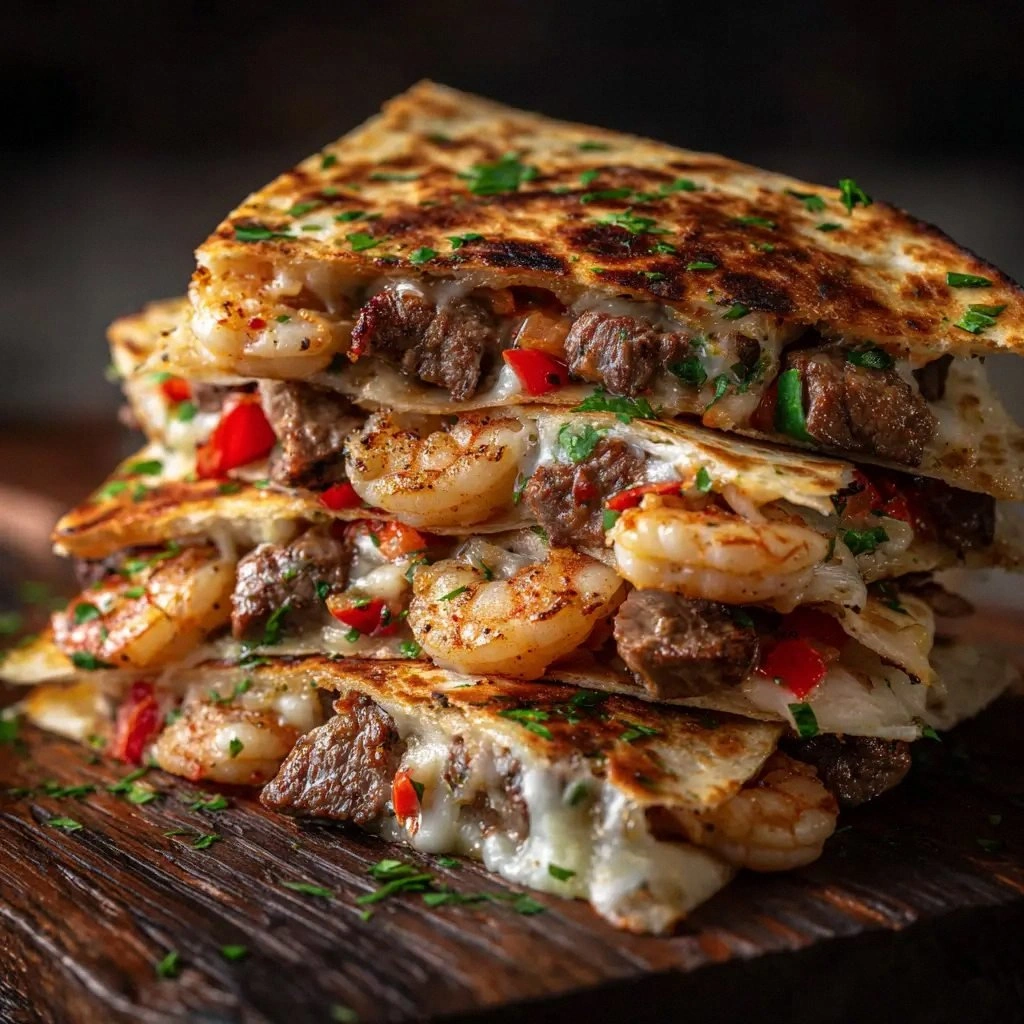
I was halfway through a late‑night binge of takeout when my phone buzzed with a friend’s challenge: “Make me a Creole steak and shrimp quesad that actually tastes better than the restaurant version.” I stared at the empty fridge, a pile of sirloin, shrimp, and a rainbow of peppers staring back. The kitchen lights flickered, the scent of garlic powder already humming in the air, and I was like, “Challenge accepted.” The moment my skillet met the steak, the sizzle sang a promise that this would be the kind of dish that makes your taste buds do a double‑tap on Instagram.
Picture this: a sizzling pan, the steak browning into a caramelized crust, shrimp popping with that little “pop” that screams “fresh.” The bell peppers slice into crisp, rainbow ribbons, and the onions melt into a caramelized glaze that coats the meat like a sweet syrup. The air fills with a smoky aroma that feels like a hug from a Louisiana summer. Then, the moment the cheese slides over the hot mixture, it melts into a molten, golden blanket that stretches like silk across the tortilla. I dare you to taste this and not go back for seconds; the texture alone is a triumph.
Most people think of a quesadilla as a simple cheese thing, but this version is a flavor explosion that turns the humble tortilla into a stage for a Creole symphony. The steak brings depth, the shrimp adds a briny sweetness, and the pepper blend injects a heat that’s just shy of a kiss. I’ll be honest — I ate half the batch before anyone else got to try it, and the kitchen still smelled like a festival. This is hands down the best version you'll ever make at home, and I’m about to spill all the secrets that make it so.
If you've ever struggled with balancing flavors in a quesadilla, you're not alone — and I've got the fix. The trick is to layer the heat, the umami, and the cheese in a way that each bite feels complete, not rushed. Picture yourself pulling this out of the oven, the whole kitchen smelling incredible, and the first bite sending a wave of savory, spicy, and creamy waves through your palate. Stay with me here — this is worth it, because the next part? Pure magic.
What Makes This Version Stand Out
- Flavor: The Creole seasoning blends paprika, garlic, onion, oregano, thyme, and cayenne into a punch that coats both steak and shrimp. It’s bold yet balanced, ensuring no single spice overpowers the others.
- Texture: The combination of crisp tortilla edges, juicy steak, tender shrimp, and ooey‑gooey cheese creates a multi‑sensory bite that satisfies every craving.
- Simplicity: While it sounds elaborate, the recipe only needs a handful of pantry staples and a quick prep. You’ll be ready to serve in under an hour.
- Uniqueness: Most quesadillas stick to chicken or beef; this one fuses steak and shrimp for a seafood‑meat hybrid that feels adventurous.
- Crowd Reaction: Friends and family will gasp at the first bite, and the dish is perfect for potlucks or dinner parties where you want to impress.
- Ingredient Quality: Using fresh, high‑quality steak and shrimp makes the difference between a good quesadilla and a legendary one.
- Cooking Method: Searing the meats first locks in juices, while the final pan‑fry of the assembled quesadilla gives the tortilla a perfect crunch.
- Make‑Ahead Potential: The assembled quesadillas can be pre‑made and frozen, then reheated for a quick weeknight meal.
Alright, let's break down exactly what goes into this masterpiece...
Inside the Ingredient List
The Flavor Base
The Creole seasoning is the heart of this quesadilla. Paprika brings a sweet smokiness, while garlic and onion powders add depth. Dried oregano and thyme give that herbaceous lift, and cayenne pepper injects a heat that’s just enough to dance on the tongue. Skipping any of these would leave the dish feeling flat; the blend is what turns ordinary meats into a festival.
If you’re short on fresh herbs, you can use dried oregano and thyme in equal measure. A pinch of smoked paprika can replace regular paprika for a deeper, woodsy flavor. For a milder version, reduce cayenne to ½ tsp.
The Texture Crew
The steak is the anchor; choose a sirloin with a good marbling to keep it juicy after searing. The shrimp should be peeled, deveined, and patted dry so it sears rather than steams. Bell peppers add crunch and color, while the onion brings a sweet caramelization when cooked to a golden brown.
If you want a more uniform bite, slice the steak into thin strips before cooking. This ensures each bite has a consistent chew and lets the seasoning permeate every piece. For an extra crunch, toast the tortillas lightly before filling them.
The Unexpected Star
Butter is the secret to that glossy, buttery finish on the tortillas. The 2 tbsp of butter, melted with olive oil, creates a sauce that coats the edges and prevents sticking. If you’re dairy‑free, a splash of coconut oil can work, but the flavor profile will shift slightly.
Remember, butter also adds a subtle sweetness that balances the heat. It’s the small touch that elevates a simple quesadilla into a gourmet experience.
The Final Flourish
The cheeses are the glue that holds everything together. Monterey Jack melts smoothly, while sharp cheddar adds a sharp bite that cuts through the richness. Using a blend ensures both a creamy melt and a robust flavor. If you’re looking for a dairy‑free option, try a blend of vegan mozzarella and nutritional yeast.
The 8 large flour tortillas are the canvas. They’re large enough to hold the generous filling without tearing, and their neutral flavor lets the spices shine. If you prefer a gluten‑free version, use corn tortillas, but be sure to brush them with a little oil to keep them from drying out.
Everything's prepped? Good. Let's get into the real action...
The Method — Step by Step
- Prep the meats. Pat the sirloin dry, season with salt and pepper, then slice into thin strips. Pat the shrimp dry, then toss with a pinch of cayenne, paprika, and a drizzle of olive oil. This step locks in flavor and prevents the shrimp from steaming.
- Heat the skillet. Place a cast‑iron skillet over medium‑high heat. Add 2 tbsp olive oil and 2 tbsp butter, letting the butter foam but not burn. The combination creates a silky base for searing.
- Sear the steak. Add the steak strips in a single layer. Sear for 2-3 minutes until a brown crust forms, then flip and sear the other side. Remove and set aside; the steak should still be pink in the center.
- Cook the shrimp. In the same skillet, add the shrimp. Sear for 1-2 minutes per side until they turn pink and opaque. Remove and set aside with the steak.
- Vegetable medley. Reduce heat to medium. Add sliced bell peppers and onions, sautéing until they soften and develop a slight char. This adds a sweet, smoky layer that contrasts the spicy meats.
- Combine the filling. Return steak and shrimp to the skillet. Sprinkle in 2 tbsp paprika, 2 tbsp garlic powder, 2 tbsp onion powder, 2 tsp oregano, 2 tsp thyme, 1.5 tsp cayenne, salt, and pepper. Toss everything together, letting the spices coat the meats and veggies. Cook for an additional minute to meld the flavors.
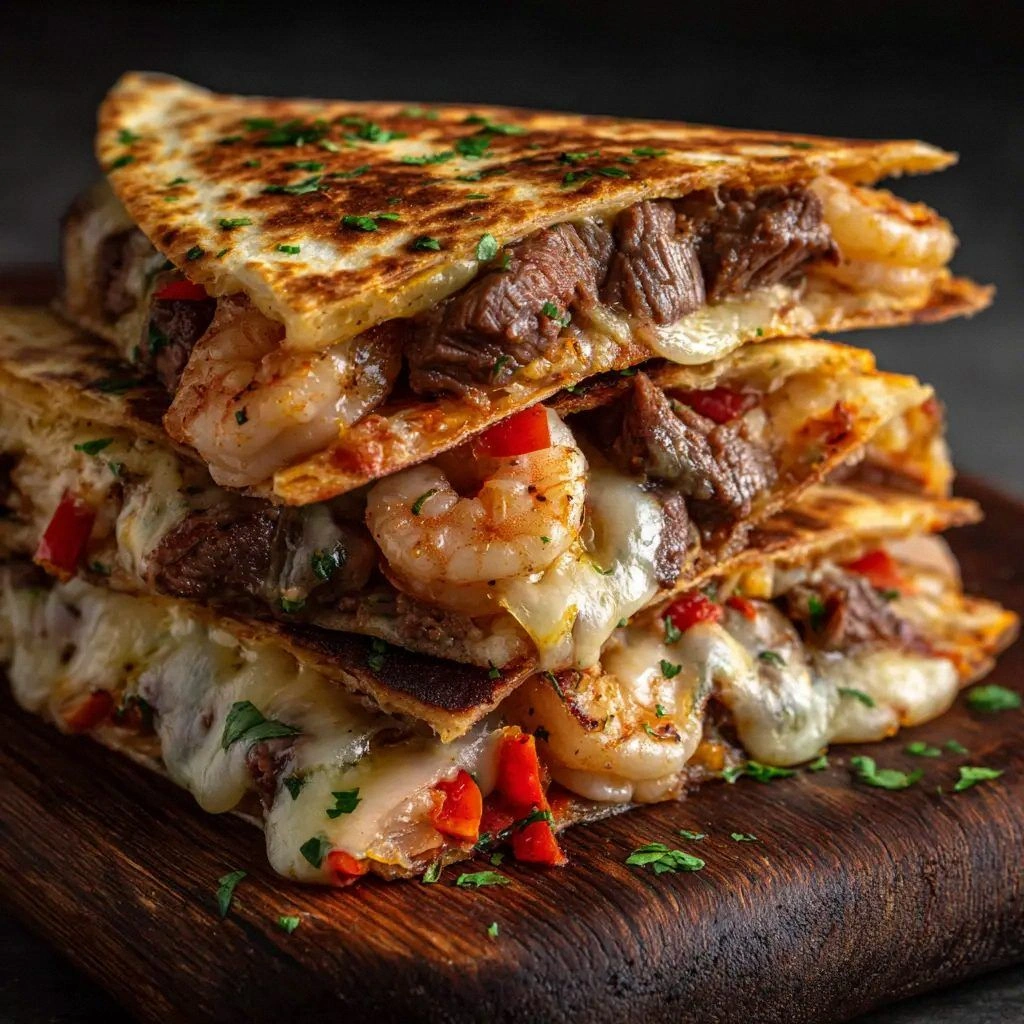
- Assemble the quesadillas. Lay a tortilla flat, sprinkle a generous amount of Monterey Jack and cheddar cheese, then spoon half the filling onto one half of the tortilla. Fold the other half over, pressing gently to seal.
- Pan‑fry the quesadillas. Heat a clean skillet over medium heat. Place the assembled quesadilla, seam‑side down. Cook for 3-4 minutes until the bottom is golden brown and the cheese starts to melt. Flip carefully and cook the other side for another 3-4 minutes.
- Rest and serve. Let each quesadilla rest for 1 minute before slicing. This allows the cheese to set slightly, preventing a gooey mess. Slice into wedges, serve hot with lime wedges, sour cream, and fresh cilantro.
That's it — you did it. But hold on, I've got a few more tricks that'll take this to another level. Trust me, the next section will help you turn this dish into a showstopper.
Insider Tricks for Flawless Results
The Temperature Rule Nobody Follows
Heat is the unsung hero. Searing the steak at medium‑high creates a caramelized crust that locks in juices. If you’re too low, the steak will steam; too high, it burns. Use a thermometer: aim for 135°F for medium‑rare. I once left the steak on a low flame and ended up with a soggy mess — lesson learned.
Why Your Nose Knows Best
As soon as the shrimp hits the pan, the aroma will hit you like a warm hug. Trust that smell; it signals that the shrimp is ready. If it still smells raw, give it another minute. That subtle scent is the hallmark of perfectly cooked shrimp.
The 5‑Minute Rest That Changes Everything
After searing the steak, let it rest for five minutes. This allows the juices to redistribute, making each bite juicy rather than dry. I once skipped this step and ended up with a steak that was dry and unappetizing.
The Cheese Blend Trick
Mixing Monterey Jack with sharp cheddar gives a creamy melt and a tangy bite. If you prefer a milder flavor, replace half the cheddar with mozzarella. The key is to have at least one cheese that melts well and one that adds sharpness.
The Sauté Timing
Sauté the peppers and onions just until they start to soften, not until they're fully caramelized. Over‑cooking them will make them mushy and lose their crunch. I once left them on low heat for 15 minutes, and they turned into a soggy mess.
Creative Twists and Variations
This recipe is a playground. Here are some of my favorite ways to switch things up:
Cajun Kick
Swap the Creole seasoning for a Cajun blend and increase cayenne to 2 tsp. The result is a punchier heat that feels like a beach day in the Gulf.
Mediterranean Flair
Replace the butter with olive oil, add a handful of chopped kalamata olives, and sprinkle feta cheese on top. The briny olives and tangy feta give a Mediterranean vibe.
Vegan Version
Use plant‑based shrimp, tofu, or tempeh. Substitute dairy cheeses with vegan cheese blends and use coconut oil instead of butter. The texture stays hearty, and the flavor stays bold.
Breakfast Edition
Swap the steak for breakfast sausage and add diced potatoes. Top with a fried egg before sealing the tortilla. The result is a hearty breakfast quesadilla that will keep you full all day.
Low‑Calorie Twist
Use low‑fat cheeses and reduce the amount of butter. Substitute the flour tortillas with whole‑wheat or corn tortillas. The flavor stays intense while cutting calories.
Storing and Bringing It Back to Life
Fridge Storage
Store assembled quesadillas in an airtight container for up to 3 days. Keep them in the fridge at 40°F or below to maintain freshness. When ready to reheat, pop them in a skillet over medium heat until the cheese melts again.
Freezer Friendly
Wrap each quesadilla tightly in foil and place in a freezer bag. They’ll keep for up to 2 months. To reheat, thaw overnight, then bake at 350°F for 15 minutes or pan‑fry until crispy.
Best Reheating Method
Add a tiny splash of water to the skillet before reheating; it steams the tortilla, keeping it soft and preventing the cheese from drying out. Finish with a quick drizzle of olive oil for a fresh finish.