Love this? Pin it for later! 📌
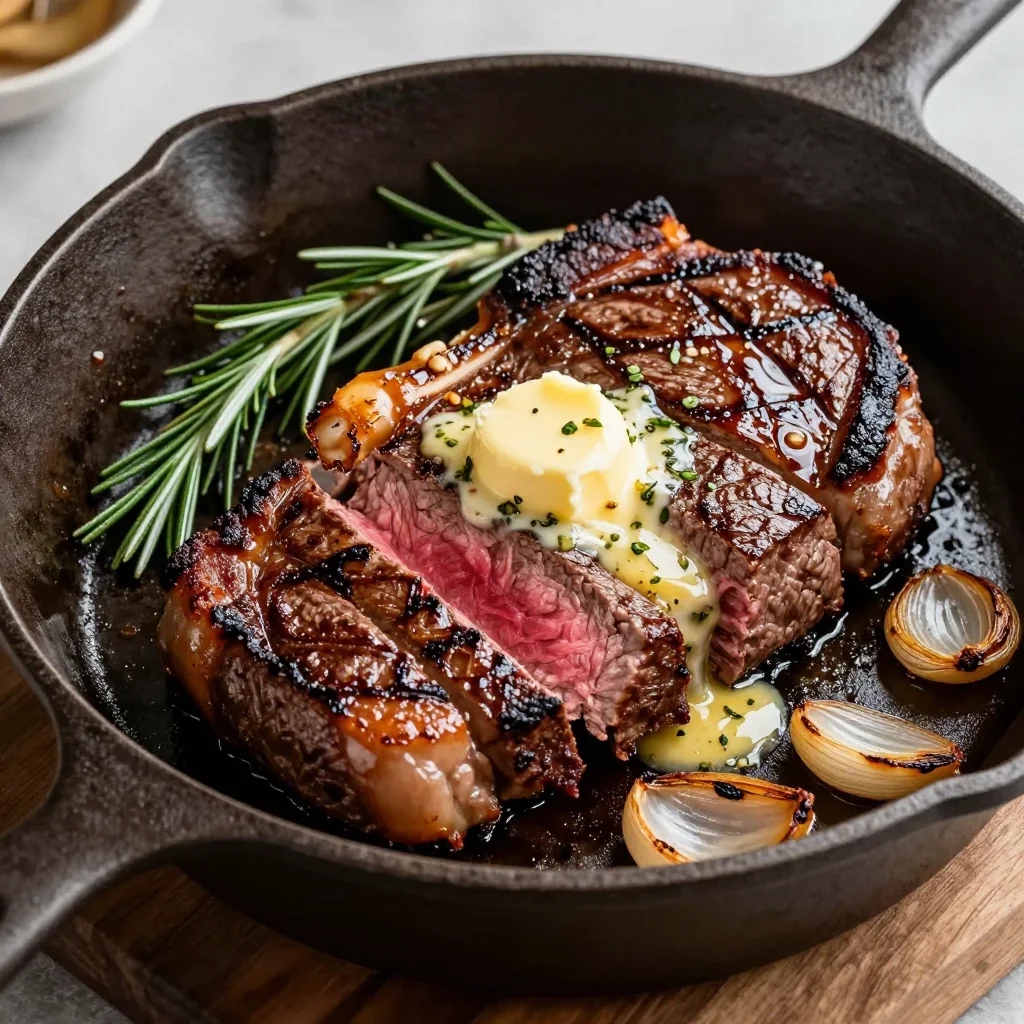
There’s something about NFL playoff season that makes me want to trade in my usual sheet-pan dinners for something that feels like a celebration. Maybe it’s the crisp January air, the way the living-room lights dim against the glow of the television, or the sound of friends piling through the front door with six-packs and hopeful predictions. Whatever the magic is, it always leads me to the same place: my 12-inch cast-iron skillet sizzling away with thick, beautifully marbled rib-eyes.
I started making skillet steaks for playoff games back in 2017 when the underdog Eagles stunned everyone (including my die-hard Steelers-fan husband). We’d planned to grill, but an ice storm rolled through Pittsburgh and banished us indoors. I seared the steaks on the stovetop, basted them with butter, garlic, and rosemary, and served them sliced on a wooden board so everyone could grab a piece between downs. The Eagles won, my husband declared the steak “good-luck food,” and a tradition was born. Six Januarys later, the menu hasn’t changed—only the teams have.
This method delivers the deepest, most even crust I’ve ever achieved without a restaurant-grade broiler. It’s virtually smoke-free if you oil the steak (not the pan), and it works on any stove—gas, electric, or induction. You’ll baste with foaming herb butter, creating a glossy mahogany lacquer that makes every bite taste like a special-occasion steakhouse dinner. Pair it with a platter of loaded potato skins and a quick arugula salad, and you’ve got the MVP of playoff feasting.
Why This Recipe Works
- Cast-Iir Retention: A pre-heated cast-iron pan holds high heat, giving you a steakhouse-quality crust without a grill.
- Reverse-Sear Option: Finish in the oven for edge-to-edge medium-rare perfection on thicker cuts.
- Butter-Basting Magic: Foaming butter infused with aromatics caramelizes the surface while keeping the interior juicy.
- Smoke Control: Oil the steak, not the pan, to reduce splatter and smoke in small kitchens.
- Game-Day Timing: 10-minute rest window is perfect for plating wings, refilling drinks, or catching the two-minute warning.
- Feed-a-Crowd Friendly: Slice the steak and serve on a communal board so guests graze without missing a play.
Ingredients You'll Need
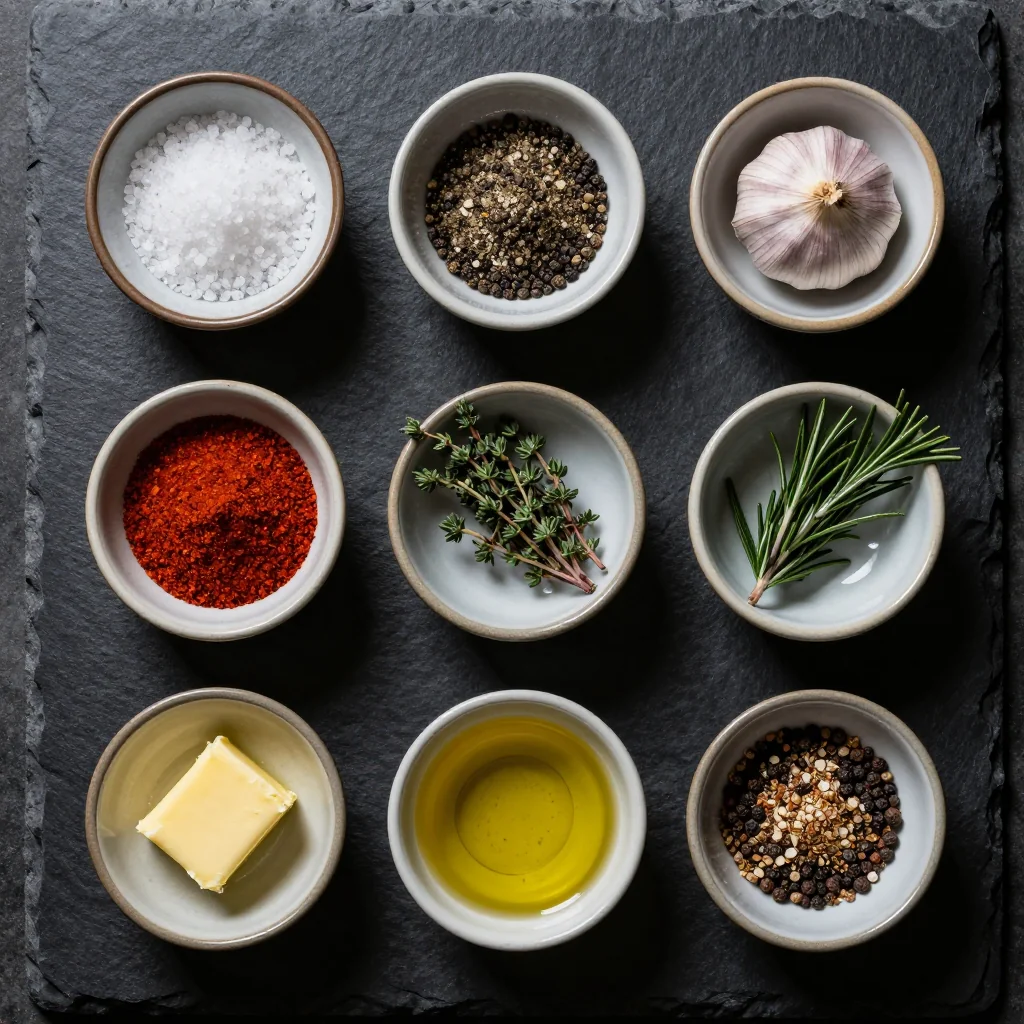
Steak night success starts at the butcher counter. Look for 1¼–1½-inch thick rib-eyes or strip steaks with abundant intramuscular fat (marbling). Those thin white veins melt during cooking and self-baste the meat from within. If you can swing it, buy Certified Angus Beef or USDA Prime; Choice works in a pinch but may need an extra dab of butter for richness.
You’ll need a neutral high-smoke-point oil such as grapeseed, canola, or avocado oil. Save the olive oil for finishing; its lower smoke point can turn bitter at 450 °F. Kosher salt is non-negotiable for the crust—its coarse crystals draw surface moisture and encourage the Maillard reaction. Fresh-cracked black pepper adds floral heat; pre-ground tastes dusty by comparison.
For the basting butter, use unsalted so you can control salinity. Salted butter fluctuates in sodium across brands and can oversalt your steak in the final minutes. Add aromatics like crushed garlic cloves, fresh thyme or rosemary sprigs, and a shallot halved through the root. The herbs perfume the butter; the shallot’s natural sugars caramelize and lend subtle sweetness.
Finally, keep a knob of chilled compound butter on hand for finishing. I mash softened butter with crumbled blue cheese and chopped chives, roll it in parchment, and freeze. A coin of this melting over hot steak just before serving catapults flavor into the end zone.
How to Make Cast Iron Skillet Steak for NFL Playoffs
Dry-Brine the Steaks
Pat steaks very dry with paper towels. Season both sides generously with kosher salt (about ½ tsp per side). Place on a wire rack set over a sheet pan and refrigerate uncovered for at least 45 minutes and up to 24 hours. The surface will look slightly desiccated—this is exactly what you want for a craggy crust.
Temper & Season
Remove steaks 30 minutes before cooking to take the chill off. Right before searing, brush lightly with grapeseed oil and crack a heavy shower of black pepper over both sides. Press the pepper so it adheres.
Preheat the Skillet
Place dry cast-iron pan on medium-high burner for 3 minutes, then raise to high for 2 more. You want the surface hovering around 450 °F. A drop of water should skitter and evaporate instantly but the pan should not glow red.
Sear Side One
Lay steaks away from you to avoid splatter. Do not move them for 2½–3 minutes. Peek underneath: you want a deep walnut crust with almost black edges. If it’s pale, keep cooking another 30–45 seconds.
Flip & Add Aromatics
Turn steaks with tongs. Reduce heat to medium. Add 2 Tbsp unsalted butter, 2 crushed garlic cloves, 2 thyme sprigs, and the halved shallot. When butter foams, tilt pan toward you so butter pools near the handle.
Baste Relentlessly
Using a dessert spoon, ladle hot herb butter over the steaks for 1 minute. Aim for the white fat caps; melting fat equals flavor. Keep basting until butter browns and smells nutty but not burnt.
Check Doneness
Insert an instant-read thermometer horizontally through the side: 120 °F for rare, 130 °F for medium-rare, 140 °F for medium. Remember carry-over cooking will add 5 degrees while resting.
Rest & Glaze
Transfer steaks to a clean board. Top with a slice of blue-cheese compound butter and tent loosely with foil. Rest 8–10 minutes so juices redistribute. Meanwhile, pour a pilsner and refresh the chip bowl.
Slice for Sharing
Cut on a slight bias against the grain into ¼-inch slices. Arrange on a wooden platter, drizzle with any resting juices, and sprinkle with flaky salt. Set out toothpicks so fans can grab without forks.
Expert Tips
Preheat Until a Water Drop Dances
Too cool and you’ll boil the meat; too hot and you’ll trigger the smoke alarm. Listen for the faint “tic-tic” of the metal expanding—an auditory cue the pan is ready.
Oil the Steak, Not the Pan
A light sheen on the meat prevents sticking and reduces splatter. Pouring oil into a screaming-hot pan creates instant aerosol and sets off alarms.
Don’t Crowd the Pan
Overcrowding drops surface temperature and steams the steaks. If cooking for a crowd, use two skillets or sear in batches and hold on a wire rack in a 250 °F oven.
Reuse the Butter
Strain the nut-brown butter through a coffee filter and chill. You now have beef-infused gold for roasted potatoes tomorrow morning—perfect for Monday morning quarterbacking.
Rest on a Rack, Not a Plate
Air circulating under the steak prevents the bottom crust from stewing in its own juices and turning soggy.
Finish with Flaky Salt
A final pinch of crunchy Maldon salt on the sliced steak gives little bursts of salinity and a textural pop that keeps everyone coming back for more.
Variations to Try
Chili-Lime Compound Butter
Swap blue cheese for softened butter mixed with lime zest, minced jalapeño, and a pinch of smoked paprika for Southwest flair.
Coffee-Chile Rub
Add 1 tsp each finely ground espresso and ancho chile powder to your salt before dry-brining for a bittersweet crust reminiscent of Texas barbecue.
Surf-and-Turf Upgrade
During the last minute of basting, add butter-poached shrimp to the pan and spoon the same herb butter over them for a luxe one-pan surf-and-turf.
Reverse-Sear for 2-Inch Steaks
For cowboy-cut rib-eyes, roast on a rack at 275 °F until 115 °F internal, then sear in the skillet 90 seconds per side for edge-to-edge pink.
Keto Garlic-Butter Ghee
Replace butter with ghee infused with garlic and rosemary for a high-smoke-point, lactose-free option that still delivers rich buttery flavor.
Asian-Inspired Glaze
After resting, brush steaks with a quick reduction of soy, mirin, grated ginger, and a touch of honey, then sprinkle with toasted sesame seeds.
Storage Tips
Steak is best hot off the skillet, but leftovers happen—especially when wings, nachos, and chili also vie for stomach real estate. Cool leftover slices within two hours and refrigerate in a shallow airtight container up to 3 days. Reheat gently in a covered skillet with a splash of beef broth over medium-low until just warmed; microwaves turn the steak gray and chewy.
For longer storage, vacuum-seal slices with a pat of compound butter and freeze up to 3 months. Thaw overnight in the fridge, then submerge the sealed bag in 130 °F water for 15 minutes to reheat without overcooking—essentially a mini sous-vide. Use reheated steak in steak-and-egg breakfast burritos, Philly cheesesteaks, or atop a winter panzanella with roasted squash and cranberries.
Save the bones for an impromptu stock. Roast them with onion and carrot at 425 °F until browned, then simmer with aromatics for 2 hours. The smoky, herb-flecked stock makes an incredible base for French onion soup—perfect for the post-game week ahead.
Frequently Asked Questions
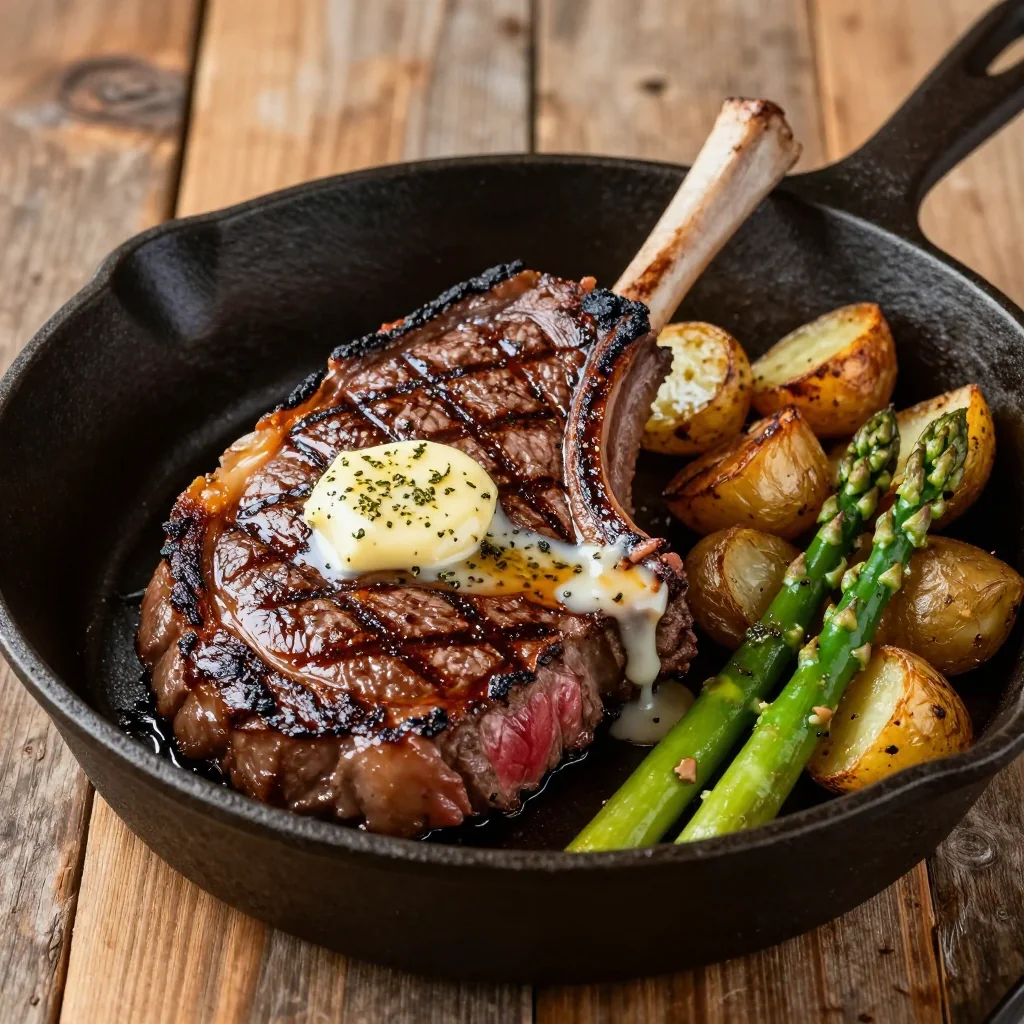
Cast Iron Skillet Steak for NFL Playoffs
Ingredients
Instructions
- Salt & Dry-Brine: Season steaks generously with kosher salt; refrigerate uncovered on a rack 45 min–24 h.
- Temper: Remove steaks 30 min before cooking; brush with oil and crack pepper over both sides.
- Preheat Skillet: Heat dry cast-iron pan on high until a water bead skitters, about 5 min total.
- Sear: Lay steaks away from you; sear 2½–3 min without moving until deep brown crust forms.
- Flip & Baste: Turn steaks, add butter, garlic, herbs, and shallot. Spoon foaming butter over steaks 1 min.
- Check Temp: Cook to 130 °F for medium-rare. Transfer to board, top with compound butter, tent loosely with foil 8 min.
- Slice & Serve: Cut against grain; sprinkle with flaky salt. Serve on communal board for game-day grazing.
Recipe Notes
Oil the steak, not the pan, to minimize smoke. For thicker cuts, finish in a 400 °F oven after searing. Resting is non-negotiable—juices redistribute for the juiciest bite.